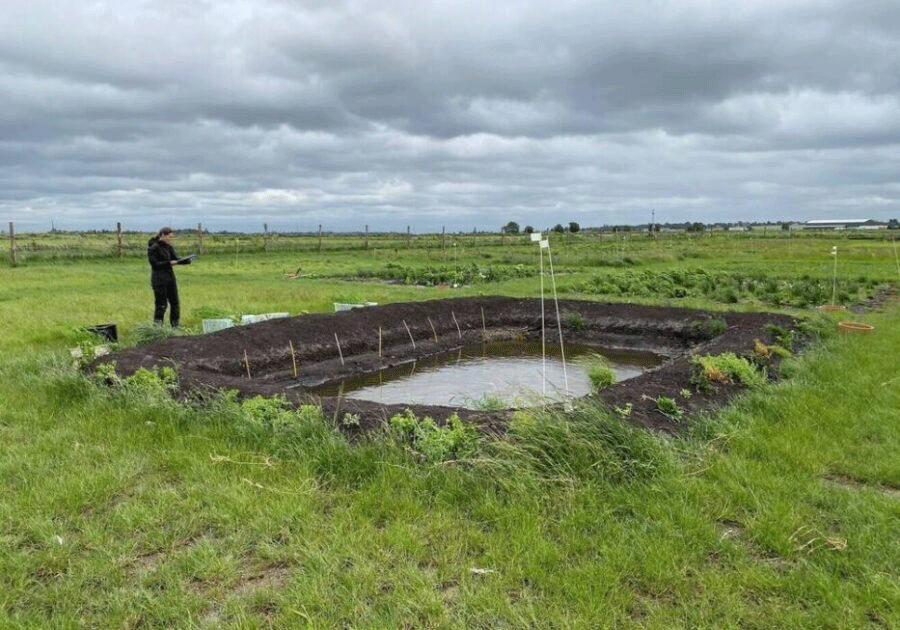
The Cambridgeshire Fens, a cornerstone of UK vegetable production, are facing a silent crisis. Beneath the prolific harvests of potatoes and onions lies a disappearing asset: the peat soil itself. Due to centuries of drainage for agriculture, the region’s peatland has shrunk from an estimated 150,000 hectares to a mere 24,000 hectares of thinning topsoil, which continues to degrade and release stored carbon into the atmosphere. In a groundbreaking initiative, scientists from the UK Centre for Ecology & Hydrology (UKCEH) are partnering with local farmers to overturn this paradigm. Their strategy: stop fighting the water and start farming with it, using a practice known as paludiculture to grow crops like rice on deliberately rewetted peat.
The Science of Rewetting: Balancing Emissions and Production
The core environmental problem is that drained peatlands oxidize, emitting carbon dioxide. In the UK, these degraded soils are a significant source of greenhouse gases, contributing 3% of the nation’s total emissions. The AgZero+ project, funded by NERC and BBSRC, is testing whether rewetting can halt these emissions while maintaining a productive landscape. The trials are comprehensive, measuring not just crop yield but also greenhouse gas fluxes, carbon stocks, water use, and biodiversity impacts.
The crop selection is strategically diverse. Alongside novel introductions like rice, the project includes traditional produce (lettuce), bioenergy crops (hybrid willow), and wet woodland habitats. This multi-pronged approach acknowledges that no single solution will fit all contexts; the goal is to provide a robust evidence base for farmers and policymakers to evaluate the trade-offs and benefits of different land-use options on rewetted peat.
Rice as a Pioneer Crop: A Global Palette for a British Climate
The most eye-catching element of the trial is the cultivation of nine cold-hardy rice varieties sourced from across the globe, including Brazil, Italy, and the Philippines. These varieties—which include types for risotto (Arborio), basmati-style (Dellmati), and sushi (Koshihikari)—have been selected for their potential suitability to the Fenland climate. Propagated from seed supplied by the USDA and transplanted into specially constructed paddy fields, this rice represents a tangible test of the UK’s shifting agricultural potential under climate change. The first harvest, expected in October, will provide initial data on viability and yield.
The Farmer’s Perspective: Adapting to Secure a Legacy
For farmers like Craig and Sarah-Jane Taylor, on whose land the trials are taking place, this is not merely an academic exercise. It is a necessary exploration of adaptation. They recognize that their highly productive soils are “very susceptible to the changing climate.” The trials are critical for understanding the practicalities of large-scale rewetting, including its direct impact on yields and farm income, as well as potential co-benefits like enhanced wildlife habitat and natural flood prevention. Their involvement underscores a forward-thinking mindset focused on building a resilient legacy for future generations.
The rice paddies of Cambridgeshire are a powerful symbol of a necessary agricultural transition. The traditional model of draining carbon-rich peatlands for conventional agriculture is ecologically unsustainable. The work of UKCEH and the Taylors demonstrates a proactive and science-led path forward. While rice may not become a staple of the British landscape, its successful trial would prove that profitable paludiculture is possible. The ultimate success of this initiative will be measured by its ability to provide a viable, data-backed blueprint for transforming the Fens from a source of carbon emissions into a model of climate-resilient, productive, and sustainable land management.
Error