

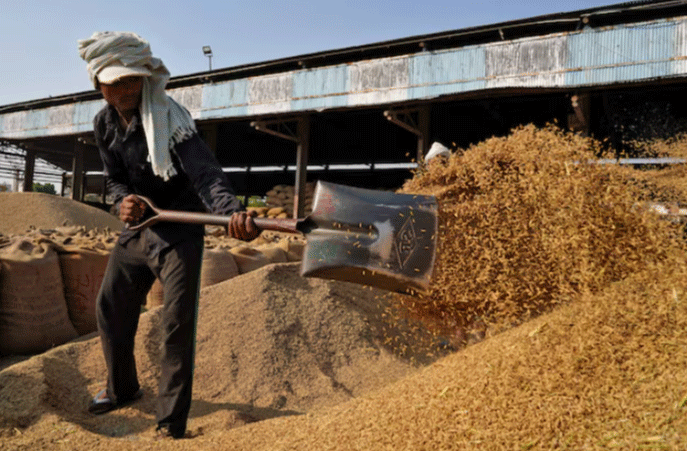
In a significant move for global agricultural trade, the Indian government has lifted its ban on exports of de-oiled rice bran (DORB), effective immediately. The restriction, which had been in place since July 2023, had cut off a key supply line for the international cattle feed industry. Before the ban, India was a major player, exporting approximately 500,000 metric tons of DORB annually, a trade valued at around 10 billion Indian rupees (approx. $120 million USD), primarily to Vietnam, Thailand, and other Asian nations. The decision to reopen this channel will have immediate and far-reaching consequences for feed formulation costs, domestic oil production, and global commodity dynamics.
Understanding the Product and Its Market
De-oiled rice bran is a byproduct of rice milling. After brown rice is polished to produce white rice, the resulting rice bran is stabilized and processed to extract valuable rice bran oil. The remaining material—DORB—is a nutrient-rich ingredient prized in animal feed, particularly for ruminants, due to its high fiber and protein content. The initial ban was widely interpreted as a measure to control domestic feed costs and ensure the availability of affordable animal protein within India, a nation with a massive dairy sector.
Global and Domestic Implications of the Policy Reversal
The resumption of exports is a strategic decision with multiple layers of impact:
- Relief for International Feed Markets: Southeast Asian feed compounders, who had relied on Indian DORB, were forced to find more expensive alternatives over the past two years. The return of Indian supplies will provide a cost-effective option, potentially lowering feed production costs in a region with a growing livestock sector. This could slightly ease pressure on other competing feed ingredients like corn and wheat bran.
- Boost for Domestic Rice Millers and Processors: For India’s extensive rice milling industry, the export window represents a crucial value-added revenue stream. The ability to sell DORB internationally typically improves realizations for millers, making the entire processing operation more profitable. Industry officials have stated that the resumption will lead to higher production of both DORB and its parent product, rice bran oil, stimulating the entire value chain.
- A Barometer of Domestic Supply Confidence: The decision to lift the ban signals the government’s confidence in the domestic availability of feed resources. It suggests that internal supplies are sufficient to meet demand without fueling inflationary pressures, a key concern for Indian policymakers. This move aligns with a pattern of India carefully calibrating its agricultural export policies based on domestic food security and price stability considerations.
India’s decision to end its two-year ban on DORB exports is a calculated move that re-establishes its role in the global feed ingredient market. It underscores the interconnectedness of agricultural byproduct streams and their critical importance to both domestic economies and international trade. For global importers, it promises greater supply diversity and potential cost savings. For Indian processors, it unlocks vital value-added revenue. However, this policy remains susceptible to change based on domestic inflationary trends and harvest outcomes. Stakeholders across the supply chain—from farmers and agronomists monitoring rice production to agricultural engineers optimizing oil extraction and scientists improving feed formulations—should view this not as a permanent fixture, but as a dynamic element in a globally balanced and politically sensitive market.


