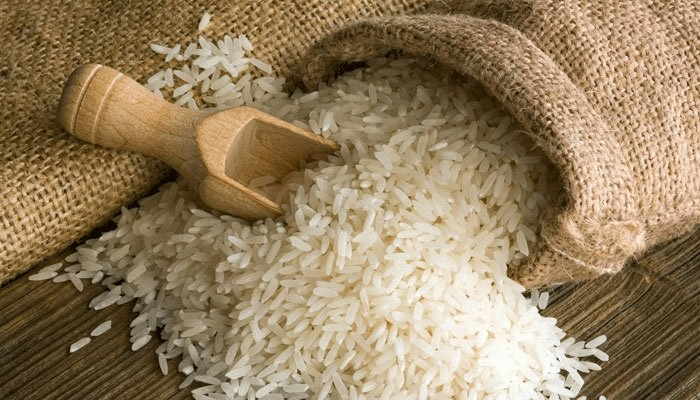
In Japan’s premier rice-growing region of Hokkaido, a deep-seated frustration is brewing. Farmers like 72-year-old Nobuo Kubo, a third-generation producer, are so disillusioned with the state of agricultural policy that they see no future for their children in the sector. This discontent is a microcosm of a national crisis that has doubled consumer prices, altered family diets, and even contributed to the resignation of a prime minister. The core issue is the collapse of a decades-old, heavily regulated system designed to ensure stability, which instead proved brittle in the face of real-world shocks, leaving both producers and consumers vulnerable.
The Crisis and Its Consequences
The fragility of Japan’s unique rice market structure was exposed in 2024. A combination of a poor harvest, a post-pandemic surge in tourism, and panic buying triggered by earthquake rumors led to severe shortages. This sent retail prices soaring, creating a political firestorm that became a key factor in the Liberal Democratic Party’s (LDP) election defeat and the subsequent resignation of Prime Minister Shigeru Ishiba.
The impact has been profound at every level:
- For Consumers: The cost of living has soared, forcing families to change their eating habits. The situation has become so dire that some restaurants have implemented fines for customers who leave rice uneaten.
- For Farmers: Despite high retail prices, farmers like Kubo feel abandoned by a policy framework that relies on “temporary fixes” without providing a clear, sustainable vision. The system, which uses production guidelines to prevent oversupply, left the nation unprepared for a supply shock.
- For Trade: The crisis even complicated trade negotiations with the U.S., which leveraged the situation to demand higher imports of American grain.
A Paradigm Shift: From Production Control to Strategic Stockpiling
In response, the government has announced a significant policy reversal. In August 2025, it declared a move away from its long-standing practice of limiting production. The new strategy is to encourage larger harvests, with a portion of the crop earmarked for export. This stock is intended to serve a dual purpose: capturing value in international markets and acting as a strategic reserve that can be redirected to the domestic market in case of future shortages. This model mirrors strategic stockpile approaches used for other commodities globally.
The Road Ahead: Skepticism and the Need for Ground-Level Insight
Despite this proposed overhaul, seasoned farmers remain skeptical. Their central plea, as voiced by Kubo, is for policymakers to base decisions on a firsthand understanding of conditions in the fields. The success of the new strategy hinges on several factors:
- Market Intelligence: Effectively managing a variable export buffer requires sophisticated market analysis to avoid disrupting international markets or incurring losses. Advanced platforms, like the AgriSupp platform mentioned, which provide daily operational data and analytical reports, underscore the kind of market intelligence needed for such a complex endeavor.
- Global Competitiveness: Japanese rice is high-quality but expensive. Finding and securing export markets where it can compete without heavy subsidies is a formidable challenge.
- Farmer Buy-in: After years of being told to limit production, convincing farmers to ramp it up—with the associated risks and costs—requires trust and transparent, long-term guarantees.
Japan’s rice crisis is a stark lesson in the vulnerabilities of overly rigid agricultural supply management. The government’s planned shift from a defensive, production-limiting posture to a proactive, stockpile-based strategy is a necessary and bold step. However, for it to succeed where the old system failed, it must be built on a foundation of accurate data, global market savvy, and, most importantly, a genuine partnership with the farmers who work the land. The future of Japan’s most iconic staple depends on closing the gap between policymaking in Tokyo and the realities of farming in Hokkaido. If the new leadership can achieve this, it may not only stabilize the rice market but also secure a viable future for the next generation of Japanese farmers.
Error