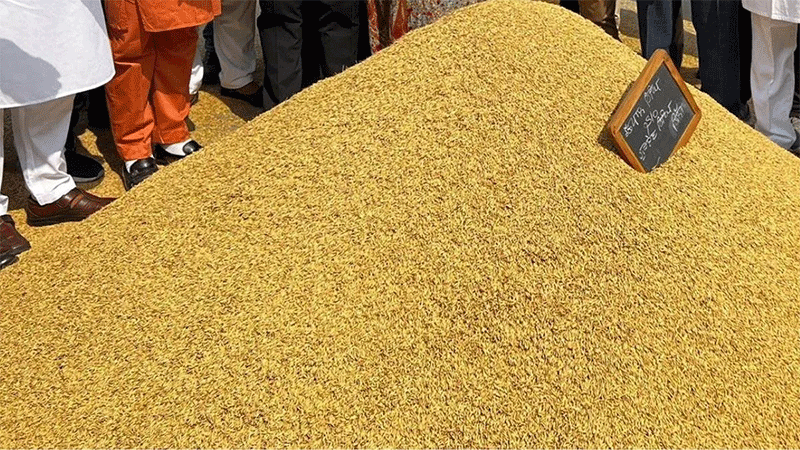
In the mountainous state of Uttarakhand, India, a clear and growing disparity in government agricultural procurement is highlighting a significant policy challenge. While state-run centers are accumulating substantial surpluses of rice (paddy), they are failing to procure enough wheat to meet local demand. This imbalance forces the state to rely heavily on the central government for wheat supplies, even as it becomes a net exporter of rice, exposing vulnerabilities in the region’s agricultural strategy and food sovereignty.
The Data: A Story of Surplus and Shortfall
The figures from the recent marketing years paint a stark picture:
- Rice Surplus: During the 2024-25 period, Uttarakhand procured a substantial 6.73 Lakh Metric Tons (LMT) of paddy. After processing and accounting for the state’s own annual consumption of 3.40 LMT of rice, it was able to send a surplus of 1.1 LMT to the central government pool. This robust procurement continues under the newly announced Rice Procurement Policy 2025-26.
- Wheat Deficit: The situation for wheat is dramatically different. The state’s annual requirement for its public distribution schemes is 152,553 Metric Tons. However, state-level procurement in the last year yielded a mere 3,100 Metric Tons. This covers only about 2% of the state’s needs, forcing it to depend on the central government for the remaining 98%.
This procurement gap is not just a statistical anomaly; it represents a critical dependency that affects the state’s ability to manage its food security programs independently.
Underlying Causes: A Shift in Cropping Patterns and Incentives
This imbalance is not accidental. It is driven by a combination of economic incentives and agro-ecological factors. The Government of India’s Minimum Support Price (MSP) system provides a guaranteed market for both paddy and wheat. However, in hill states like Uttarakhand, several factors favor paddy:
- Assured Irrigation: Paddy is a water-intensive crop, and its cultivation is often concentrated in areas with more reliable irrigation infrastructure, which are prioritized for procurement.
- Economic Certainty: The high and reliable procurement of paddy offers farmers a clear economic incentive, encouraging them to dedicate more land to it.
- Agro-climatic Suitability: While some regions of Uttarakhand are suitable for wheat, competing with the high-yielding wheat belts of Punjab and Haryana is difficult. Farmers may find it more profitable to focus on paddy where they have a comparative advantage.
This trend reflects a broader national issue. According to a 2024 report by the Commission for Agricultural Costs and Prices (CACP), India’s central pool of food grains has become heavily skewed towards rice, with stocks often far exceeding buffer norms, while wheat stocks frequently hover near or below required levels.
The situation in Uttarakhand is a microcosm of a larger structural challenge in India’s food policy. The state’s rice surplus and wheat deficit underscore how well-intentioned procurement policies can inadvertently lead to regional crop imbalances. For policymakers, agronomists, and farm owners, this highlights the urgent need for a more nuanced approach. Strategies must include promoting crop diversification tailored to the state’s topography, investing in infrastructure for procuring a wider range of staples, and potentially developing differentiated incentive structures for hill agriculture. Achieving a balance is crucial not only for Uttarakhand’s fiscal and food security but also for building a more resilient and sustainable agricultural system across India’s diverse agro-ecological zones.
Error