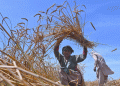


In a result that challenges conventional expectations of regional yield potential, the agricultural enterprise “Pyshlitskoye Agro” in the Shatura district of the Moscow Region has harvested a record crop of winter wheat. The farm achieved an impressive 70 centners per hectare (approximately 7 metric tons/ha) using the new variety “Ermolovka.” This figure is particularly significant as it vastly exceeds the average winter wheat yield for the Moscow Region, which typically ranges between 30-40 centners per hectare (3-4 t/ha).
The “Ermolovka” variety, a soft winter wheat developed for food production, is the product of a domestic breeding program with over 25 years of experience. This achievement highlights a critical trend in modern agriculture: genetic improvement is a primary driver of yield growth, often outweighing the limitations of soil and climate. According to a 2024 report by the UN’s Food and Agriculture Organization (FAO), genetic gains account for approximately half of the annual increase in global crop yields. The success in the Moscow Region, an area not known as a primary grain belt, demonstrates that tailored genetics can maximize productivity and expand viable cultivation zones, a crucial adaptation in the face of climate change.
The breeding company behind this success is applying similar principles to other crops. It has recently introduced new high-yielding winter rapeseed varieties, “Loris” and “Elvis,” developed in collaboration with the V.S. Pustovoit All-Russian Research Institute of Oil Crops. These varieties, alongside the champion spring rapeseed “Forpost KL,” are designed for multi-purpose use—oil, meal, green fodder, and as a cover crop. This multi-functionality is a key component of sustainable intensification, a practice supported by data from the International Seed Federation (ISF) which shows that modern crop varieties contribute significantly to farm profitability and resource efficiency.
The record yield in Shatura is more than a local triumph; it is a powerful testament to the transformative potential of strategic plant breeding. For farmers and agronomists, it underscores the immense value of selecting modern, well-adapted varieties that are specifically bred to express their full potential in local conditions. For the agricultural industry at large, it reinforces the necessity of sustained investment in domestic breeding programs. These programs are fundamental to ensuring food security, enhancing farm resilience, and unlocking productivity gains that allow agriculture to thrive beyond traditional heartlands.
Error