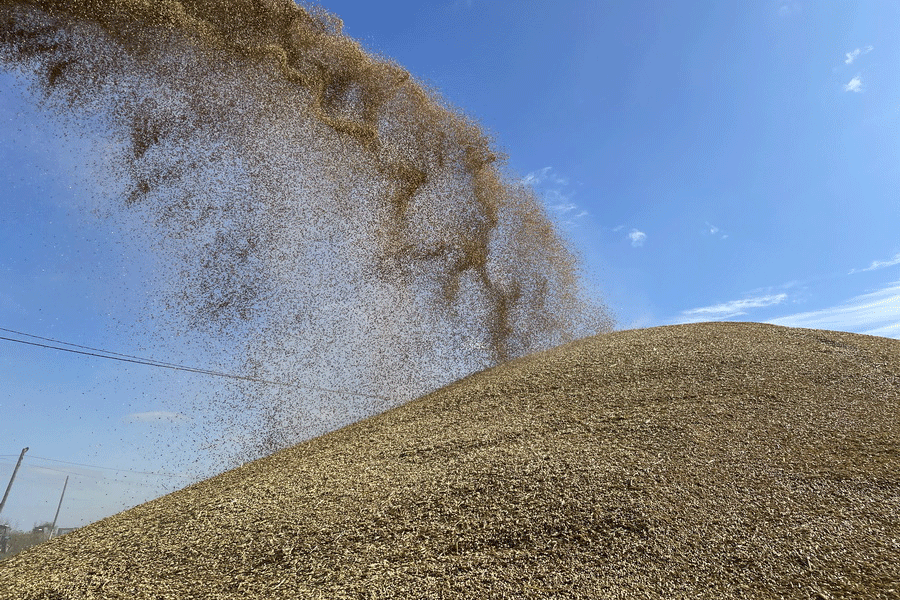
The Kazakh government has launched a multi-pronged emergency response to mitigate the severe risks posed by persistent autumn rains and falling temperatures to the 2025 harvest. Prime Minister Olzhas Bektenov has issued direct instructions to ensure the timely completion of harvesting, focusing on the critical bottlenecks of grain drying and logistics. This intervention comes as the state’s E-Ötınısh system has received approximately 500 applications from farmers citing weather-related risks and grain quality concerns, with over 300 (60%) originating from the Kostanay Region.
The core of the crisis revolves around post-harvest operations. Farmers in key northern regions like Kostanay report being unable to connect drying equipment to the gas supply network, creating an urgent need for alternative fuel. In response, the Prime Minister has instructed regional authorities (akimats) and the Ministry of Energy to allocate additional volumes of liquefied gas and diesel fuel specifically for grain drying. Furthermore, to prevent logistical gridlock, the Ministry of Transport and Kazakhstan Temir Zholy (KTZ) have been tasked with ensuring a sufficient supply of grain hopper cars and trucks, emphasizing the need for synchronized harvest and transport schedules.
The government is also addressing economic pressures on farmers. Bektenov explicitly stated that “unjustified price increases for storage services,” including for fruits and vegetables, is unacceptable and has mandated the involvement of the Agency for Protection and Development of Competition if necessary. This, combined with daily weather updates from the Ministry of Ecology, forms a comprehensive strategy to safeguard both the quantity and quality of the harvest.
Connecting to Broader Trends
This situation is a stark example of a growing global challenge. A 2024 report by the FAO highlights that climate change is increasing the frequency of extreme weather events during critical harvest windows, threatening post-harvest losses that can exceed 20%. The Kazakh government’s focus on drying capacity is crucial; research from the University of Illinois indicates that delaying drying by just 24 hours after harvest in wet conditions can lead to significant spoilage and mycotoxin development, drastically reducing grain value. The integrated approach—addressing energy, logistics, and market fairness—reflects a modern understanding that food security depends on a resilient and efficient entire supply chain, not just yields in the field.
The emergency measures in Kazakhstan underscore the profound vulnerability of modern agriculture to late-season weather. For farmers and agronomists, the event reinforces the necessity of having robust on-farm drying and storage plans. For agricultural engineers and farm owners, it highlights the economic imperative of investing in energy-efficient drying technologies. For scientists and policymakers, it is a case study in the importance of proactive, integrated government support that addresses the entire post-harvest pipeline—from fuel and machinery to logistics and market regulation—to ensure that a successful harvest in the field translates into secure, high-quality grain in the bin.
Error