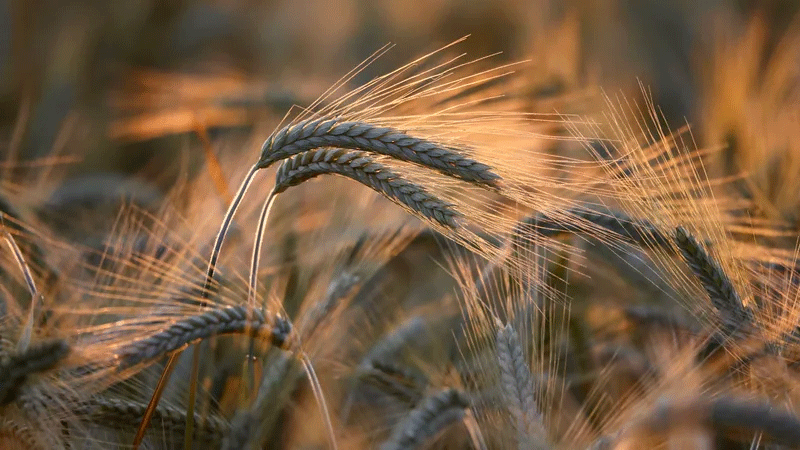
The Kazakh government has painted a challenging forecast for the country’s grain farmers. As of the government meeting on September 23, 2025, First Vice-Minister of Ecology Nurken Sharbiev detailed a week of difficult weather ahead. From September 23 to 30, nearly all major grain-producing regions—including Kostanay, Akmola, and North Kazakhstan—are forecast to receive significant rainfall, accompanied by gusty winds and a gradual drop in temperatures, bringing the risk of night-time frosts.
This adverse weather arrives at a critical juncture. Minister of Agriculture Aidarbek Saparov reported that harvest operations are well underway, with 10.2 million hectares already harvested, yielding 15.5 million tonnes of grain at an average productivity of 15.2 centners per hectare. However, the remaining unharvested areas are now exposed to substantial risk. Prolonged rain and humidity can lead to pre-harvest sprouting, fungal diseases like fusarium head blight, and a decrease in grain test weight and overall quality. Furthermore, wet fields can cause significant harvest delays and soil compaction from heavy machinery.
This scenario is a classic example of harvest-time pressure exacerbated by climate volatility. According to a 2024 report by the FAO, increasing weather unpredictability during critical agricultural windows is a growing global challenge, threatening not just yield but also the economic value of the crop through quality degradation. Research from the journal Agricultural and Forest Meteorology (2023) confirms that even short periods of post-maturity wetness can reduce the market grade of wheat, impacting profitability far more than a simple minor yield loss.
The situation in Kazakhstan underscores the perpetual race against time that defines arable farming. The success of a season, measured by the 15.5 million tonnes already harvested, can still be undermined by weather events in the final days. For farmers, agronomists, and engineers, this highlights the non-negotiable need for dynamic risk management strategies. These include leveraging precise weather forecasting, prioritizing the harvest of the most vulnerable fields, ensuring grain drying and storage capacity is ready, and making judicious decisions about machinery use in wet conditions to prevent long-term soil damage. The final quality and value of the 2025 harvest now depend on navigating this complex weather window.
Error