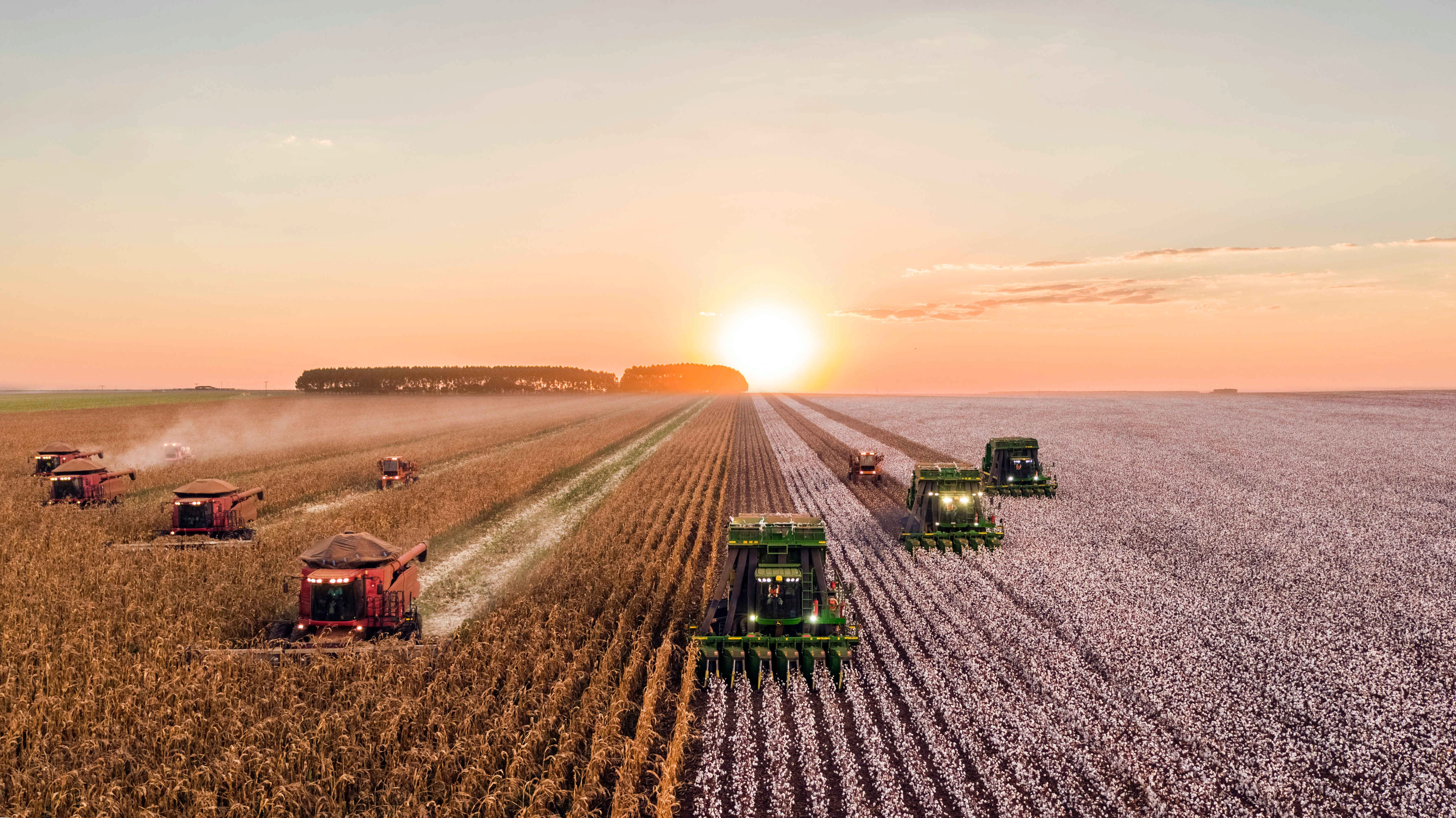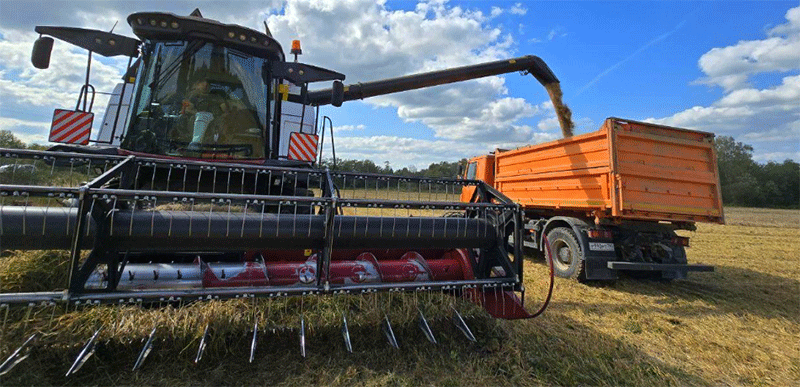
As the 2024 harvest season reaches its peak across the Northern Hemisphere, a closer look at individual farm operations provides valuable insights into current agronomic practices and challenges. At the Russian agricultural enterprise “Kolhoz Uvarovsky,” the campaign is in full swing, targeting nearly 9,800 tons of grain from 2,800 hectares. Their diverse crop rotation—spanning winter rye and wheat, spring barley and wheat, and relatively new additions of peas and rapeseed—offers a microcosm of modern production trends and the universal battle against unpredictable weather.
Harvest Data and Weather-Induced Delays
The farm’s operations, led by Director Alexander Medvedev, faced a common adversary this season: excessive rainfall. The wet conditions delayed the full start of large-scale harvesting until early September, a setback familiar to many growers this year. Despite this, preliminary yield reports are positive. The farm is achieving averages of 40-45 centners per hectare (approximately 4.0 – 4.5 t/ha), meeting or exceeding their target range of 35-45 c/ha. This aligns with slightly optimistic national forecasts for certain regions, though yields are highly variable due to localized weather patterns.
The Invisible Challenge: Managing Moisture for Quality Preservation
The significant rainfall presented a critical post-harvest challenge beyond mere delay. The team encountered grain with high moisture content, sometimes reaching 20-25%, a level that poses a severe risk for spoilage and mycotoxin development during storage. This highlights a crucial aspect of modern farming: the harvest isn’t over when the grain is cut. Their response is a textbook example of necessary risk mitigation: every kilogram of grain is being cleaned and dried down to a safe 13-14% moisture content before being stored in modern facilities. This step, while energy-intensive, is non-negotiable for preserving market quality and protecting the farm’s bottom line.
Market Strategy and Forward-Looking Operations
Parallel to the harvest, the farm is already looking ahead, having sown 400 of the planned 1,000 hectares of winter rye for the next season. Their marketing plan for this crop is notably strategic. Rather than selling it as commodity grain, the rye is destined for value-added production: malt and kvass concentrate for major Russian manufacturers. This indicates a move towards specialized production chains, seeking better margins and stable offtake agreements. The spring barley, peas, and rapeseed will likely feed into both domestic and international markets; for instance, rapeseed demand remains strong for crushing into vegetable oil and biodiesel, while peas are a valuable source of plant-based protein.
The experience of “Kolhoz Uvarovsky” in the 2024 season underscores a critical evolution in agriculture. Success is no longer defined solely by yield per hectare achieved in the field but increasingly by the ability to manage post-harvest logistics and navigate specialized markets. While favorable weather can boost yields, it can also create significant quality challenges that require sophisticated and costly infrastructure to overcome. This farm’s approach—combining diverse cropping, a focus on post-harvest quality control, and developing niche market opportunities—provides a model for others seeking to build resilience and profitability in the face of climatic and market volatility.
Error