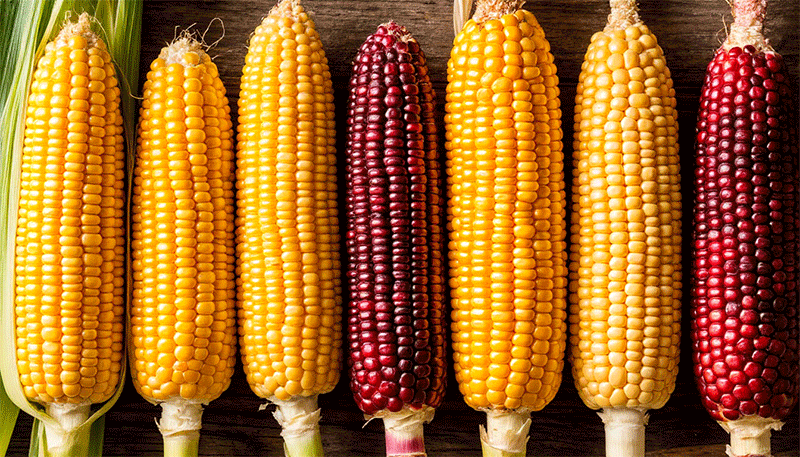
Minsk Region has embarked on one of its most ambitious agricultural campaigns, targeting nearly 800,000 tons of grain corn as part of a broader goal to harvest at least 3 million tons of total grains in 2024. This massive undertaking comes despite significant climate challenges that have created a 2-3 week growth delay across the region’s corn fields, testing the resilience and adaptability of modern agricultural systems.
Harvest Operations and Scale
The scale of Minsk Region’s corn harvesting operation is impressive in both planning and execution:
- Total corn area: 350,000 hectares combined for silage and grain
- Silage corn: 200,000 hectares designated for animal feed
- Grain corn: 150,000 hectares for grain production
- Mechanized teams: Over 200 specialized harvesting units deployed daily
- Harvest timing: Grain corn harvest expected to begin after September 20th
This organized approach represents a significant investment in agricultural efficiency. According to FAO data, such coordinated harvesting operations can improve productivity by 25-30% compared to decentralized approaches, particularly important when addressing weather-related challenges.
Regional Production Specialization
The southern regions of Minsk Oblast have emerged as corn production leaders due to optimal soil conditions:
- Starodorozhsky district: Sandy soils providing excellent drainage
- Berezinsky district: Loamy soils with good water retention
- Lyubansky district: Balanced soil composition supporting strong root development
- Chervensky district: Favorable pH levels and organic matter content
Research from the European Journal of Agronomy indicates that proper soil-crop matching can improve corn yields by 15-25%, making these soil-specific planting decisions crucial for achieving production targets.
Climate Challenges and Adaptive Management
The 2024 growing season has presented significant obstacles that required sophisticated management responses:
- Cold spring: Delayed planting and early growth stages
- Unfavorable summer weather: Reduced growing degree days accumulation
- Developmental delays: 2-3 week growth retardation compared to typical seasons
- Extended milk stage: Many regions still at milk maturity in mid-September
These conditions have particularly affected grain corn, which requires longer maturation periods than silage corn. The International Maize and Wheat Improvement Center reports that each week of growth delay during critical development stages can reduce yields by 8-12%, making the region’s production targets particularly ambitious.
Economic and Food Security Implications
The successful achievement of these production targets has significant implications:
- Regional food security: Supporting local consumption needs
- Livestock feed: Ensuring adequate supplies for animal agriculture
- Economic stability: Maintaining farmer incomes and rural employment
- Export potential: Contributing to national grain export capabilities
The World Bank estimates that each 1% increase in agricultural productivity in Eastern Europe can generate 0.5-0.7% growth in rural household incomes, highlighting the economic importance of successful harvest outcomes.
Technological Deployment and Efficiency Gains
Minsk Region’s response to climate challenges demonstrates several advanced agricultural strategies:
- Mechanized efficiency: Optimized equipment deployment across varied maturity stages
- Precision timing: Adjusting operations based on crop maturity rather than calendar dates
- Soil-specific cultivation: Leveraging regional soil advantages for different production goals
- Continuous monitoring: Regular field assessment to determine optimal harvest timing
These approaches align with climate-resilient agricultural practices recommended by the Global Agricultural Productivity Initiative, which can reduce climate-related yield losses by 20-40%.
Global Context for Corn Production
Minsk Region’s experience reflects broader global trends in corn production:
- Climate variability affecting growing seasons worldwide
- Increased need for adaptive management strategies
- Importance of regional specialization based on soil and climate conditions
- Growing emphasis on both food and feed production from corn
The International Grains Council reports that global corn production has become increasingly variable, with climate factors causing 15-20% yield fluctuations in major production regions.
Quality Considerations and Harvest Management
The delayed maturation has necessitated careful harvest planning and quality management:
- Moisture management: Critical for preventing spoilage and maintaining quality
- Drying requirements: Potential need for additional artificial drying capacity
- Storage planning: Ensuring adequate facilities for proper grain preservation
- Quality monitoring: Maintaining nutritional value and marketability
Data from the Global Harvest Initiative indicates that proper harvest timing and moisture management can affect final grain quality by 20-30%, with significant implications for market value and utilization.
Minsk Region’s 2024 corn harvesting campaign represents a remarkable exercise in agricultural management under challenging conditions. The ambitious target of 800,000 tons of grain corn, despite a 2-3 week growth delay, demonstrates how modern agricultural systems can adapt to climate variability through sophisticated planning, technology deployment, and regional specialization.
The operation offers valuable lessons for agricultural professionals worldwide: the importance of soil-specific crop selection, the value of coordinated harvesting operations, the necessity of flexible responses to weather challenges, and the critical role of timing in determining both quantity and quality outcomes.
While the delayed harvest presents additional challenges for drying and storage, the region’s systematic approach provides a model for how agricultural regions can maintain productivity targets despite climate disruptions. The ultimate success will depend on continued favorable weather conditions and careful execution of harvest and post-harvest operations.
For farmers, agricultural engineers, and policymakers, this case study highlights the importance of building resilience and adaptability into agricultural systems. As climate change increases weather variability, such capabilities will become increasingly essential for maintaining food security and economic stability in agricultural regions worldwide.
Error