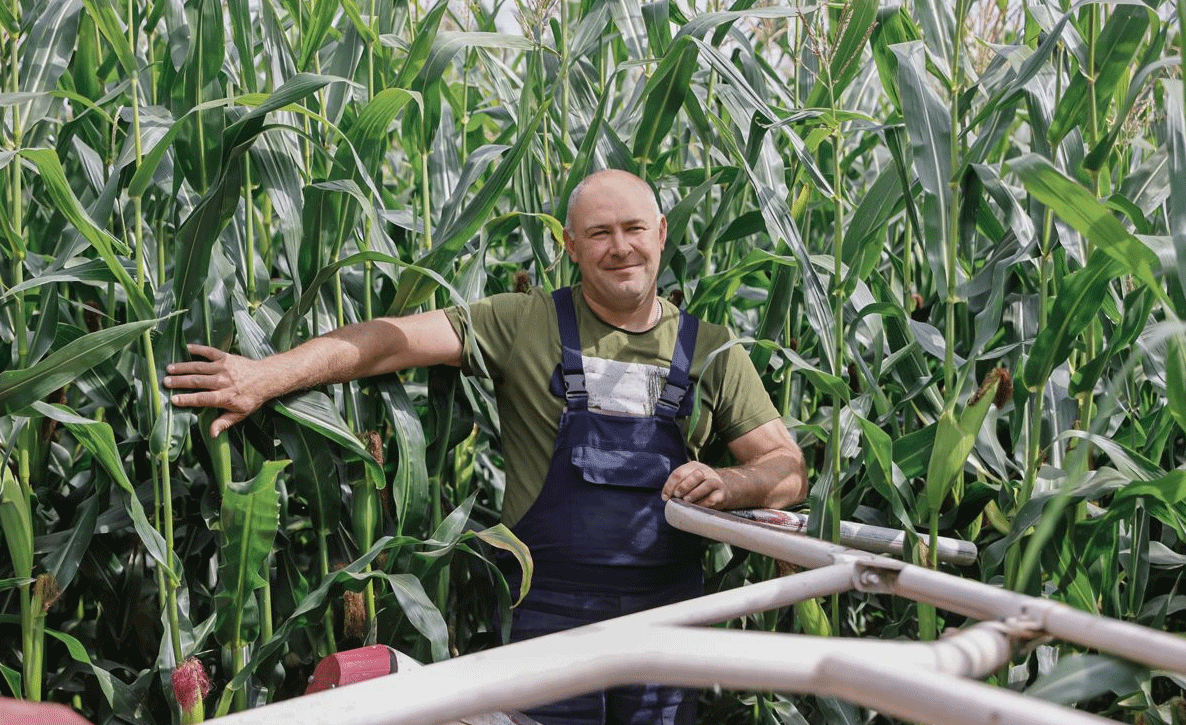
In a strategic response to devastating May frosts that damaged winter grain crops, Belarus’s Brest Region has executed a major agricultural pivot, expanding its corn area by nearly 30,000 hectares compared to 2024. The region has dedicated a massive 274,800 hectares to this versatile crop, with 212,800 ha destined for green forage and 62,000 ha for grain. This shift is not just about area; it’s a calculated move to secure the region’s feed base and protect its lucrative dairy sector, which is already seeing results with a 6.5% year-on-year increase in gross milk production over seven months.
The success of this strategy hinges on the integration of digital agronomy. Leading farms like OAO “Molodaya Gvardiya” are at the forefront, having fully digitized their technological processes. The farm, which sowed over 1,300 hectares of corn, has equipped its machinery with sensors that provide real-time data on yield mapping, fuel consumption, engine load, and individual operator performance. This allows agronomists to make critical decisions, such as prioritizing harvest in fields where corn cobs are reaching the optimal milk-wax maturity stage first. The payoff is substantial: the farm is reporting silage yields exceeding 350 centners per hectare with a moisture content of 65% and dry matter below 35%—key metrics for producing high-quality, nutritious feed.
This focus on corn and precision farming is directly linked to the region’s dairy performance. The consistent, high-quality silage is enabling balanced cattle rations, contributing to a record average daily milk yield of over 23 kg per cow across the region. This translates to approximately 6,885 tons of milk produced daily. The chairman of the regional agriculture committee, Anatoly Shchuplenkov, confirmed that corn was the essential lever to compensate for weather-related losses and ensure sufficient reserves of grass feed and fodder.
The Brest Region case study is a powerful testament to strategic resilience in modern agriculture. It demonstrates that crop diversification into high-yielding, reliable staples like corn, combined with the adoption of digital monitoring tools, can effectively mitigate climate risks. The direct correlation between investing in quality forage production through advanced agronomy and achieving tangible gains in livestock productivity (evidenced by the 6.5% milk increase) is clear. For farmers and agronomists globally, this underscores a critical formula: leveraging data-driven decisions for forage crop management is no longer a luxury but a necessity for building resilient, productive, and profitable farming systems capable of weathering volatility.
Error