In the rocky, nutrient-poor soils of Dak Wil commune—a region traditionally considered marginal for agriculture—a quiet revolution is underway. A innovative contract farming model focused on forage corn for biomass is delivering surprising yields, stable incomes, and a new sense of economic security for local farmers, particularly from ethnic minority households. This collaborative effort between companies, local authorities, and agricultural extension services is demonstrating how strategic crop selection and integrated supply chains can unlock the potential of even the most challenging landscapes.
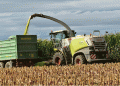
The model is simple yet powerful. Companies contract with farmers, providing a guaranteed market for their harvest. In return, the company brings machinery and labor to the fields to handle the entire harvest and milling process directly. Farmers like Mr. Bun Hun, who owns two hectares, need only wait for the company to report the kilogram yield and receive their payment. This removes the immense burden and risk of post-harvest logistics for the farmer. The results are striking: yields reached an impressive 56-58 tons of biomass per hectare, far exceeding expectations. The company, Bao Nam Agricultural Import-Export Company Ltd., is purchasing the harvest directly in the field at an average price of 750 VND per kilogram. For Mr. Hun, this translated to nearly 20 million VND in profit in just three months from his two hectares.
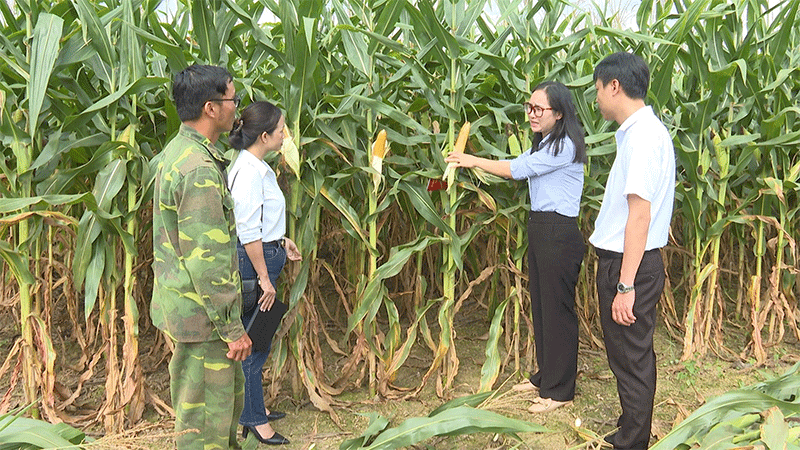
The success hinges on the crop’s suitability. Farmers consistently report that forage corn is far easier to cultivate than grain corn. It is more resistant to pests and diseases, highly tolerant of variable weather, and perfectly adapted to Dak Wil’s arid conditions. This aligns with global research from institutions like the FAO, which promotes drought-tolerant forage crops as a critical strategy for sustainable livestock production in marginal environments, preventing land degradation and improving rural incomes.
The local government is a key facilitator. Mr. Ngo Ba Gon, Vice Chairman of the Dak Wil Commune People’s Committee, reported that all produce from the 28 hectares farmed by 32 households this season was consumed 100% by the company. Seeing the potential, the commune has ambitious plans to develop nearly 1,000 hectares of its undernourished land into a dedicated raw material zone for livestock feed. The goal is to continue mobilizing and guiding residents to partner with businesses to increase incomes and reduce poverty.
The Dak Wil forage corn initiative is a powerful blueprint for agricultural development in marginal areas. It proves that profitability is not solely dependent on high-fertility land but can be engineered through a triad of factors: selecting the right resilient crop, establishing a secure and streamlined value chain through contract farming, and providing dedicated technical support. This model effectively de-risks farming for vulnerable communities, ensures a reliable raw material supply for the animal feed industry, and productively utilizes land that would otherwise be left fallow or be prone to low-yield, unsustainable practices. For agronomists and policymakers focused on dryland agriculture, it offers a replicable model of resilience and commercial success.
Error