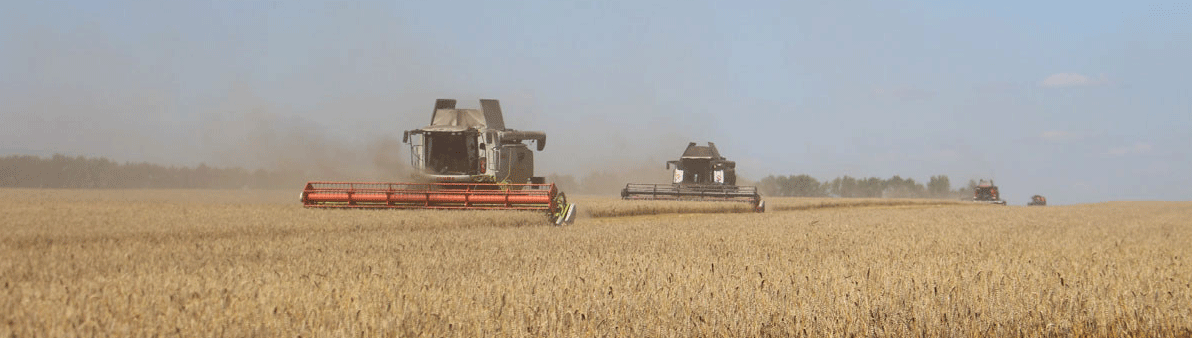
In an era where global food security and farm profitability are paramount, achieving consistently high yields is the ultimate goal for every serious agricultural producer. While macroeconomic factors and weather patterns are often discussed, the true difference is made at the field level, through precise agronomic management. The recent results from the peasant farm (KФX) of Alexey Skuratov in the Sarayevsky District serve as a powerful case study. They are currently harvesting an impressive 67.8 centners per hectare (approximately 6.78 tonnes per hectare or 101 bushels per acre) of grain.
To appreciate this achievement, one must consider the context. According to the latest forecast from the USDA Foreign Agricultural Service for the 2024/25 season, the average wheat yield for the Russian Federation is projected to be around 2.7 tonnes per hectare. The IKAR agricultural consultancy often reports average Russian yields in a similar range, between 2.5 and 3.0 t/ha depending on the region and season. Skuratov’s yield is more than double the national average, placing his operation in the top tier of productive enterprises not just in Russia, but on a global scale.
The scale of the operation adds to the significance. With nearly 6,000 hectares to harvest, this is not a small plot trial but a large-scale commercial success. As of August 18, they had harvested 1,620 hectares (27.2% of the total area), producing a substantial 10,978 tonnes of grain already.
The farm’s leadership attributes this success to a holistic approach rather than a single silver bullet. The key technical pillars they cite are:
- Proper Soil Tillage: Implementing tillage practices that optimize soil structure, moisture retention, and root development without causing excessive erosion.
- Thoughtful Crop Rotation: Breaking pest and disease cycles and managing soil fertility through a planned sequence of crops, a practice increasingly validated by international research for its long-term yield benefits.
- Rational Use of Fertilizers: This implies a precision agriculture approach—applying the right type, amount, and timing of nutrients based on soil tests and crop needs, maximizing efficiency and minimizing waste and environmental impact.
- Judicious Use of Plant Protection Products: Employing integrated pest management (IPM) strategies to control weeds, diseases, and pests effectively while preserving beneficial organisms and preventing resistance.
Perhaps most importantly, the owner highlighted the human factor: “But, first and foremost, this is thanks to the people, their efforts, skills, and ability to work as a team.” This underscores that advanced technology and practices are only as effective as the team implementing them.
The performance of KФX Skuratov A.A. demonstrates that exceptional yields are achievable through a commitment to foundational agronomic principles executed with precision and consistency. It reinforces that the synergy between science-based practices—targeted soil management, intelligent crop rotation, and precision nutrition—and a skilled, motivated workforce is the undeniable formula for overcoming productivity plateaus. For agronomists and farm owners aiming to boost their own results, this case study is a compelling reminder to audit their core practices, invest in their team, and focus on the meticulous management of every hectare.
Error