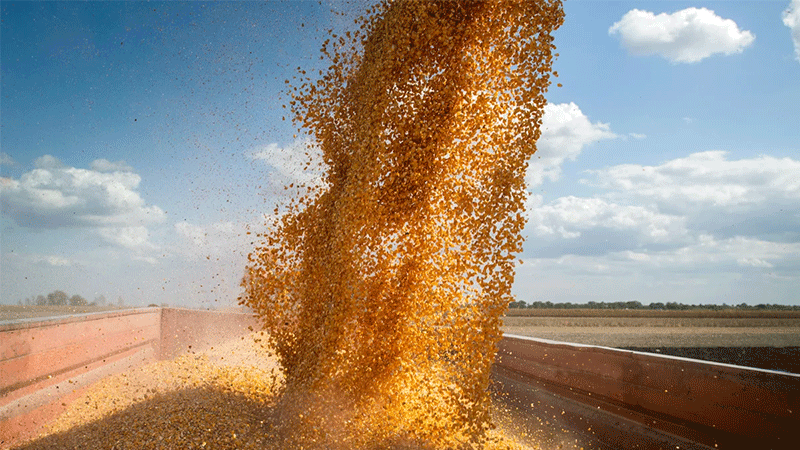
Siberian exporters have successfully expanded their grain trade to Latin America and Africa, according to Vasily Sokolov, head of the department for interaction with state authorities at the office of the Presidential Envoy to the Siberian Federal District. This strategic move comes as Russia strengthens its position in the global agricultural market.
In the first half of 2025, grain and legume exports from Siberian regions reached 3.3 million tons, marking a 3% increase compared to the same period in 2024. This growth aligns with Russia’s broader agricultural export strategy, which has seen a shift toward non-traditional markets due to geopolitical and logistical factors.
Global Demand and Market Shifts
The expansion into Latin America and Africa reflects rising global demand for affordable grain, particularly as traditional suppliers face climate and trade disruptions. According to the FAO’s 2025 Grain Market Report, Africa’s wheat imports are expected to grow by 5% this year, while Latin America seeks cost-effective alternatives to U.S. and EU grain.
Siberia’s competitive advantage lies in its vast arable land and improving logistics. The Russian Grain Union reports that investments in port infrastructure and rail networks have reduced delivery times to Africa by 15% compared to 2023.
Challenges and Future Prospects
Despite progress, challenges remain, including:
- Logistical costs (still higher than Black Sea routes)
- Currency fluctuations affecting trade profitability
- Competition from major exporters like Brazil and Argentina
However, with global grain prices remaining volatile (up 8% YoY, per World Bank data), Siberian farmers have a strong incentive to diversify exports.
Siberia’s entry into Latin American and African grain markets marks a significant step in Russia’s agricultural expansion. With rising global demand and improved logistics, Siberian producers are well-positioned to capitalize on these opportunities—provided they navigate cost and competition challenges effectively.
Error