

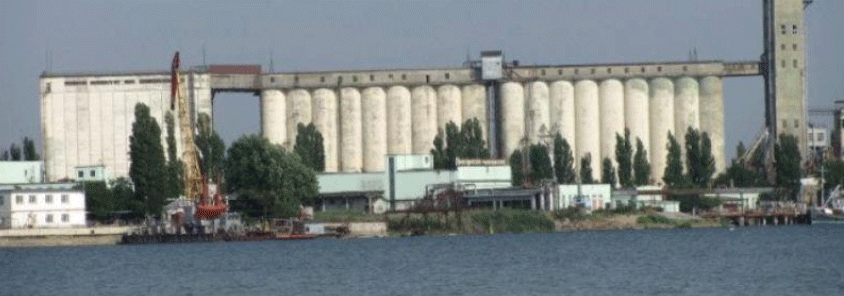
AFK Sistema’s agricultural holding “Step” has announced plans to sell its port assets in Azov and Volgodonsk, including the city’s first and largest grain elevator. This 60,000-ton capacity facility, built in the 1960s-70s, represents both the legacy and challenges of Russia’s grain storage infrastructure.
Key Facility Statistics
- Total storage capacity: 79,800 tons
- Vertical silos: 70,200 tons
- Flat storage: 9,600 tons
- Annual export potential: 600,000 tons via river-sea class vessels
- Daily throughput:
- 5,000 tons to ships
- 1,500 tons to rail (currently unused)
Financial Realities Driving the Sale
The elevator’s declining performance mirrors sector-wide pressures:
- 2024 revenue drop: 40% (167M to 101M rubles)
- Net profit decline: 71% (85M to 25M rubles)
- Staffing: Only 67 permanent employees remain
Competitive Pressures in the Region
Volgodonsk’s grain terminal landscape is evolving:
- Port Grain (2004)
- Capacity: 45,000 tons
- Modern automated systems
- Valli Port
- Newer facilities with better rail connectivity
- Planned Volgo-Don Port terminal
- Designed for 21st century export demands
The Modernization Dilemma
The sale raises critical questions:
- Investment required: $15-20M for full upgrade (Rosagrotrans estimates)
- Obstacles:
- Outdated vertical storage technology
- Lack of rail utilization despite available tracks
- Competition from newer terminals
Broader Implications for Russian Agriculture
- Export bottlenecks: Russia needs 25% more grain storage by 2030 (Ministry of Agriculture)
- Infrastructure gap: 60% of elevators built before 1990 require upgrades
- Global competition: Modern Ukrainian terminals process grain 30% faster
Potential Paths Forward
- Public-private partnerships for infrastructure renewal
- Conversion to specialty crop storage (higher margins)
- Integration with new Volgo-Don Port development
A Watershed Moment
The Volgodonsk elevator sale represents:
- The urgent need for storage infrastructure investment
- Shifting geographic patterns in Russian grain exports
- Opportunities for strategic buyers to reposition assets
As Russia aims to maintain its position as the world’s top wheat exporter, modernizing its storage and logistics network will be critical.
Error


