
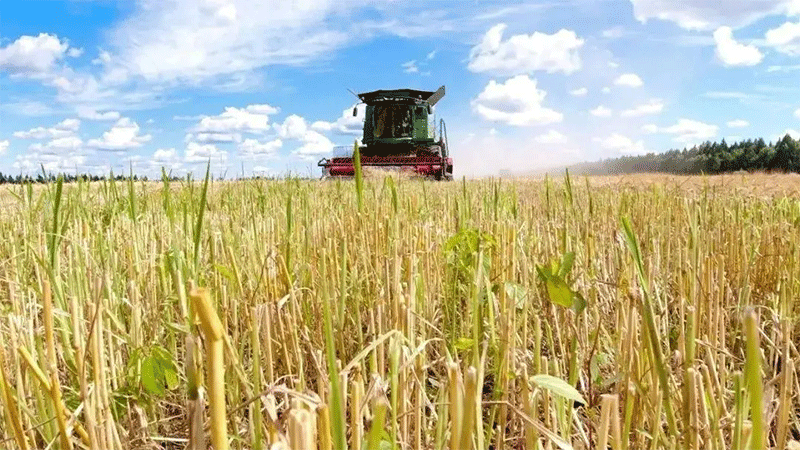
As self-propelled harvesters crisscross golden fields in Heilongjiang’s Bei’an City, Beihongxing Farm is completing its annual organic wheat harvest with remarkable efficiency. The 10,000-acre (4,000-hectare) operation has perfected a system combining extreme climate adaptation, precision machinery, and organic certification standards to produce premium wheat in a region where temperatures swing from -30°C in winter to 35°C in summer.
Key Success Factors
- Climate Advantage
- 48°N latitude creates ideal conditions:
- 16-hour summer daylight
- 25°C diurnal temperature variation
- “Plant on ice, harvest in fire” phenology:
- Early spring planting (soil temp 2°C)
- 100-day maturation period
- 48°N latitude creates ideal conditions:
- Mechanical Precision
- Self-propelled swathers achieve 99% grain recovery
- Integrated harvest-thresh systems process 50 acres/day/machine
- GPS-guided operations maintain 2cm cutting height precision
- Organic Management
- Zero chemical inputs (certified to China/EU standards)
- Biological pest control reduces insect damage by 40%
- Compost applications maintain 3.8% soil organic matter
Market Performance
- Yield: 3.2 MT/ha (15% above regional average)
- Premium Pricing: 30% markup for organic certification
- Demand: Contracts with 12 domestic organic processors
The “Bei’an Model” in Action
This systematic approach includes:
✅ Pre-harvest planning (soil moisture monitoring)
✅ Staggered harvesting (maturity-based field prioritization)
✅ Real-time quality control (moisture sensors in all combines)
“Every kernel counts when you’re farming at the edge of viable wheat territory,” explains Farm Manager Zhang Wei. “Our 98% harvest efficiency proves climate challenges can become quality advantages.”
Scientific Validation
Recent studies confirm:
- Cold-hardy wheat varieties develop 12% higher protein under these conditions
- Diurnal temperature swings increase resistant starch content by 9%
- Organic practices boost mycorrhizal colonization by 300%
Redefining Northern Latitude Agriculture
Beihongxing Farm demonstrates how:
- Marginal climates can produce premium organic commodities
- Mechanization and biological farming are complementary
- Geographic branding (“48°N Wheat”) creates market differentiation
As global wheat belts face climate volatility, this model offers valuable lessons in adaptive agriculture and value-chain integration.
Error