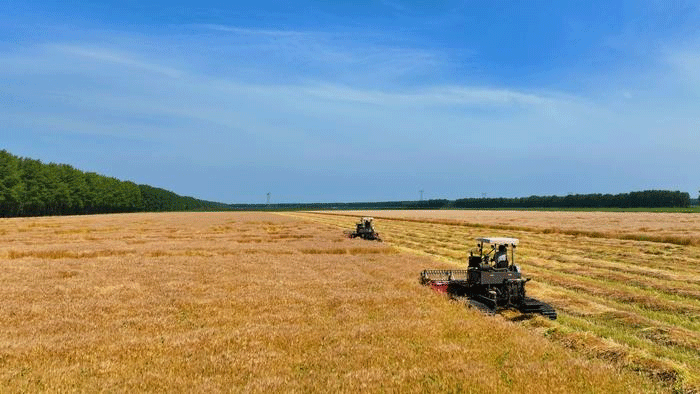
As July’s sun bathes Heilongjiang Province, the 852 Branch of Beidahuang Agricultural Co. has begun harvesting its premium organic wheat crop using innovative techniques that combine traditional wisdom with modern technology. This year’s harvest of disease-resistant “Longmai 35” and “Kechun 120832” varieties showcases China’s growing leadership in sustainable grain production.
Precision Harvesting Technology in Action
- Two-Stage Harvesting: Cut-and-swath method maximizes grain quality
- Advanced Equipment: Self-propelled swathers with GPS guidance ensure 5cm cutting height precision
- Trained Operators: 100+ technicians received specialized training on new machinery
Organic Production by the Numbers
| Practice | Implementation | Benefit |
|---|---|---|
| Seed Treatment | Bio-coatings | 30% fewer soil-borne diseases |
| Fertilization | 8 tons/ha organic manure | 12% higher protein content |
| Pest Control | Biological agents | Zero chemical residues |
From Field to Market: Value-Added Processing
The harvest will flow into multiple value streams:
- Premium Direct Sales: Contracted orders with organic food processors
- Processing: Conversion to organic flour (15% extraction rate) and noodles
- Brand Development: “Black Earth Gold” product line development
Xue Zhonghai, Agricultural Production Director, notes: “These golden grains are our black soil’s true treasure – each kernel meets strict EU and Chinese organic standards.”
Scientific Foundations of Success
- Soil Health: Continuous organic matter input maintains 5.2% soil organic content
- Varietal Selection: Disease-resistant cultivars reduce input needs by 40%
- Microbiome Management: Native mycorrhizal fungi boost nutrient uptake
A Model for China’s Agricultural Future
Beidahuang’s organic wheat program demonstrates how:
- Traditional black soil farming can evolve sustainably
- Precision agriculture enhances organic yields
- Value-chain integration maximizes farmer profits
As China pursues its “dual carbon” goals, such models of low-input, high-value agriculture will become increasingly vital for national food security and environmental protection.
Error