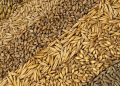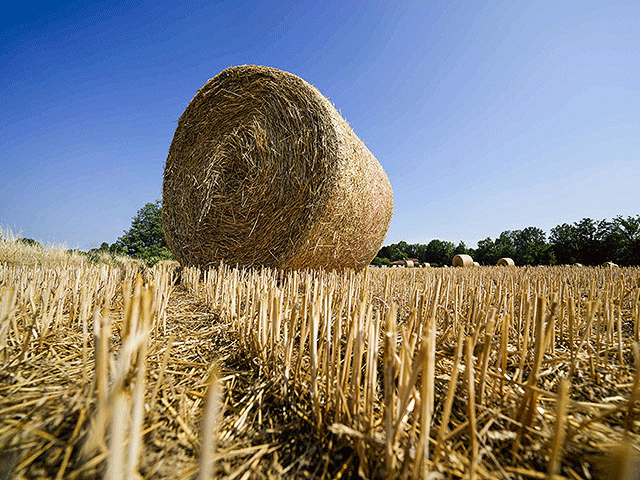
Every year, millions of tons of agricultural residues—such as wheat straw, oat hulls, potato pulp, and beet pulp—are left after harvest. Instead of burning or discarding these byproducts, scientists are now exploring ways to repurpose them into valuable materials, including textiles.
A study by Chalmers University of Technology tested various agricultural residues and found that oat hulls and wheat straw are the most effective for producing soluble pulp, a key material in textile manufacturing. Unlike traditional wood-based cellulose, which requires extensive processing (debarking, chipping, and heavy chemical use), agricultural waste can be processed more efficiently.
Eco-Friendly Processing: The Soda Cooking Method
The researchers used soda cooking, an alkaline boiling process that breaks down the raw material without toxic chemicals. This method is:
- More sustainable – No harmful environmental impact.
- Less chemically intensive – Requires fewer chemicals than wood pulp processing.
- Simpler and cost-effective – Eliminates steps like debarking and grinding.
Additionally, this approach adds value to agricultural waste, turning low-value byproducts into high-demand textile materials.
Beyond Wheat and Oats: Expanding the Possibilities
The research team is now investigating other agricultural residues, including grass pulp, with promising results. In an ongoing international project, they have successfully produced textile fibers from wheat and grass-based cellulose, paving the way for broader applications.
The conversion of agricultural waste into textiles presents a win-win solution:
✔ Reduces farm waste and environmental pollution.
✔ Offers a sustainable alternative to wood-based and synthetic fabrics.
✔ Creates new revenue streams for farmers and agribusinesses.
As this technology advances, we may soon see clothing made from crop residues on a commercial scale, marking a significant step toward a circular economy in agriculture.
Error