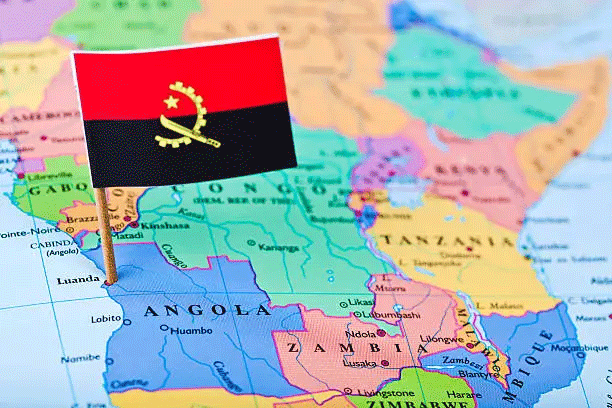
In a significant agricultural development, Citic Construction Co., a subsidiary of China’s state-owned Citic Ltd., is leading a $250 million investment to develop 100,000 hectares of soybean and corn farms in Angola. This move comes as China aggressively diversifies its agricultural imports away from the U.S. amid ongoing trade uncertainties.
Key Project Details
- Investment Scale: $250 million over 5 years
- Land Development: 100,000 hectares targeted
- Initial Phase (2025): 10,000–20,000 hectares to be cultivated
- Production Goals: 15,000 tons annually of soybeans and corn
- Export Commitment: 60% to China, 40% for local Angolan consumption
Why Angola? China’s Strategic Calculations
- Trade War Hedge: With U.S. soybean exports to China dropping to just 20% of China’s 105M-ton annual import needs (2024 data), Angola offers a new supply channel.
- Geopolitical Positioning: Angola’s Minister of Agriculture Isaac dos Anjos stated the country aims to capitalize on “global geopolitics, trade wars, and market blockades.”
- Infrastructure Advantage: Chinese companies already dominate Angola’s construction sector, enabling integrated farm-to-port logistics.
The Bigger Picture: China’s Global Food Security Playbook
This Angola initiative follows China’s recent moves to:
- Secure soybean meal imports from Argentina
- Expand agricultural investments in Russia and Brazil
- Develop alternative protein sources to reduce soybean dependence
Comparative Import Data (2024):
| Supplier | % of China’s Soybean Imports |
|---|---|
| Brazil | 58% |
| U.S. | 20% |
| Argentina | 12% |
| Others | 10% |
Potential Impacts
✅ For Angola: Could become Africa’s next agricultural powerhouse
✅ For Global Markets: May further reduce U.S. agricultural exports to China
✅ For Farmers: New high-tech farming methods likely to be introduced
Challenges Ahead
- Land Clearing: Already underway but may face environmental scrutiny
- Local Capacity: Need to train Angolan farmers in modern techniques
- Market Stability: Global price fluctuations could affect profitability
A New Era in South-South Agricultural Cooperation
This China-Angola partnership represents more than just farmland development—it’s a strategic chess move in global food politics. For agribusiness professionals, it underscores:
- The growing importance of Africa in global commodity markets
- China’s long-term planning to control its food supply chains
- New opportunities for agricultural technology exporters
As trade wars reshape global agriculture, such South-South collaborations may become the new normal.
Error