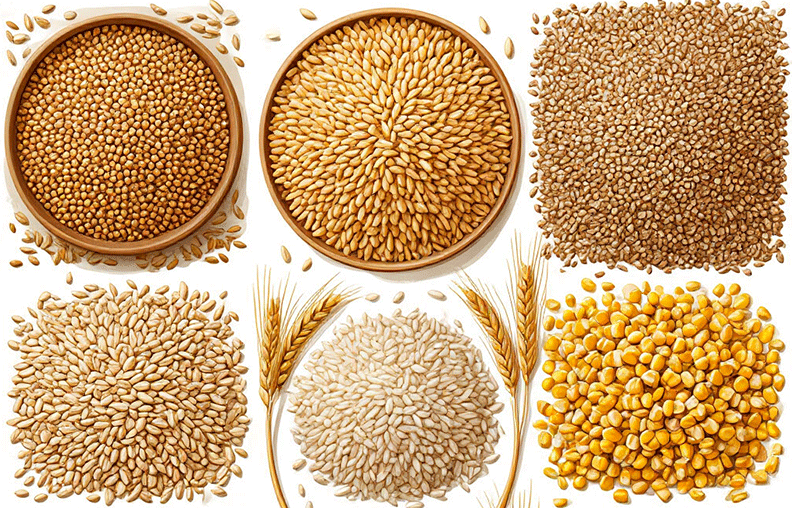
Recent data from Rosstat, reported by Zerno On-Line, reveals a troubling trend in Russia’s grain processing sector. From January to June 2025, the country produced 844.7 thousand tons of cereals, marking an 8.1% decrease compared to the same period in 2024. This downturn affects key staple grains, raising concerns among farmers, agronomists, and food security experts.
Sector-Specific Declines
- Buckwheat: Production fell to 253.6 thousand tons, down 6.7% from 2024.
- Rice: Output dropped sharply to 227.8 thousand tons, a 15.3% decline.
- Wheat cereals: Reduced to 72.2 thousand tons, an 8.2% decrease.
- Oat cereals: Down to 54.9 thousand tons, a 12.7% slump.
Possible Causes
Several factors may be contributing to this decline:
- Adverse Weather Conditions: Unpredictable climate patterns, including droughts and excessive rainfall, have disrupted crop yields.
- Economic Constraints: Rising input costs (fertilizers, fuel, machinery) may have forced farmers to reduce planting areas.
- Export Restrictions or Domestic Demand Shifts: Changes in trade policies or consumer preferences could be influencing production volumes.
Global and Domestic Context
Globally, cereal production has faced challenges due to climate change and geopolitical tensions affecting supply chains (FAO, 2025). Domestically, Russia’s agricultural sector must adapt to maintain food security and export competitiveness.
Mitigation Strategies
To counter these losses, experts recommend:
- Adopting Climate-Resilient Crops: Drought-resistant grain varieties could stabilize yields.
- Precision Agriculture: Advanced farming technologies (IoT, AI-driven analytics) may optimize resource use.
- Government Support Policies: Subsidies for farmers and investment in storage infrastructure could help buffer future declines.
The 8% drop in Russia’s cereal production in early 2025 highlights vulnerabilities in the agricultural supply chain. Stakeholders—from farmers to policymakers—must collaborate to enhance productivity, sustainability, and resilience. Proactive measures, including technological adoption and policy adjustments, will be crucial in reversing this trend.
Error