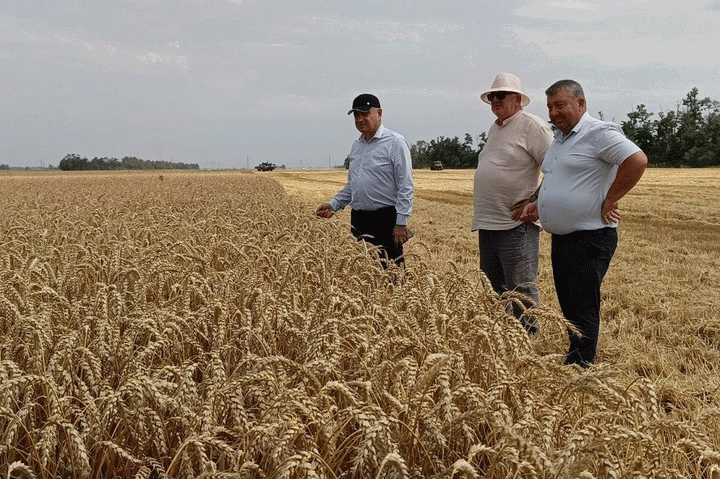
The Koshekhablsky District in Russia is currently in the midst of a successful winter wheat harvest, following the completion of winter barley harvesting. This year, farmers are cultivating 15,120 hectares of winter wheat, a key crop for the region’s agricultural output.
During a recent inspection, local authorities visited one of the district’s farms, where winter rapeseed threshing had just concluded with a yield of 25 centners per hectare. The same farm is now harvesting 120 hectares of winter wheat, with preliminary reports indicating outstanding productivity.
Key Factors Behind the High Yields
According to the district administration, the record yield of 70 centners per hectare was achieved through timely and high-quality agronomic practices, including optimized fertilization, pest control, and precision farming techniques. Such results highlight the importance of modern agricultural management in maximizing crop potential.
Globally, average wheat yields vary significantly—for instance, the EU averages around 60 centners per hectare, while the US reaches approximately 35 centners per hectare (FAO, 2023). Russia has been steadily increasing its wheat productivity, with leading regions now competing with European benchmarks.
Government Support Driving Progress
Zaur Khamirzov, head of Koshekhablsky District, emphasized that state support for farmers remains a priority, helping to enhance production efficiency, adopt advanced technologies, and improve rural livelihoods. Government programs, including subsidies for equipment and crop protection, have played a crucial role in these achievements.
The success of Koshekhablsky District’s wheat harvest demonstrates how combining best agronomic practices with strong policy support can lead to exceptional yields. As global demand for wheat continues to rise, such models of sustainable and high-efficiency farming will be essential for food security.
Error