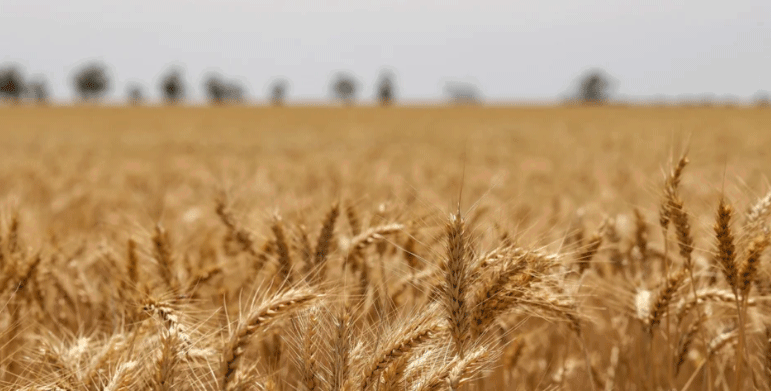
Wheat sprouts have long been recognized as a nutrient-dense food, but new research highlights their extraordinary potential in combating oxidative stress—one of the key drivers of aging and chronic diseases. Scientists at the Chinese Agricultural University discovered that flavonoids, natural compounds abundant in wheat sprouts, significantly enhance antioxidant activity, offering promising health benefits.
Flavonoids: Nature’s Defense Against Oxidative Damage
Flavonoids are bioactive compounds that neutralize reactive oxygen species (ROS), which damage cells and contribute to aging, cancer, and neurodegenerative disorders like Alzheimer’s. The study, published in Seed Biology, found that wheat sprouts are particularly rich in these protective molecules, especially in their germ—the part responsible for sprouting new plants.
Key Findings from the Study
- Researchers analyzed 228 Chinese wheat varieties, identifying substantial differences in flavonoid content.
- Among 62 tested varieties, Xiaoyan 269, Suixuan 101, and Zhoumai 30 had the highest levels of luteolin and chrysoriole derivatives—flavonoids with potent antioxidant effects.
- Jasmonic acid treatment—a plant stress hormone—was used to boost flavonoid production by up to 30%, suggesting a practical method for enhancing nutritional value in crops.
Implications for Agriculture and Nutrition
These findings open new opportunities for:
- Farmers & Breeders: Selecting high-flavonoid wheat varieties for cultivation.
- Food & Supplement Industries: Developing functional foods and antioxidant-rich products.
- Sustainable Farming: Using natural elicitors like jasmonic acid to enhance crop quality without genetic modification.
Globally, the demand for nutraceutical crops is rising, with the functional food market projected to reach $275 billion by 2025 (Grand View Research, 2023). Wheat sprouts could play a crucial role in meeting this demand.
Wheat sprouts are more than just a health trend—they represent a scientifically validated superfood with the potential to improve longevity and disease resistance. By integrating high-flavonoid wheat varieties and natural enhancement techniques, the agricultural sector can contribute to better nutrition and sustainable health solutions.
Error