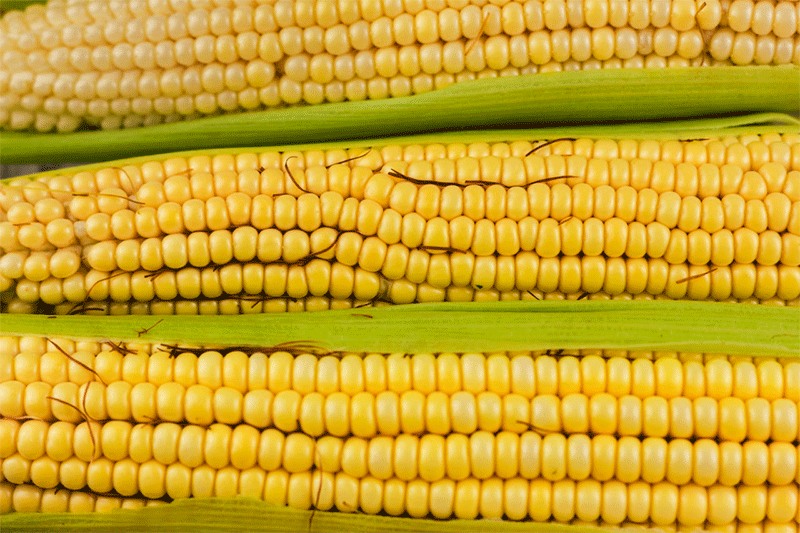
The Krasnodar Krai, one of Russia’s most fertile regions, is facing severe drought and record-high temperatures, threatening this year’s corn harvest. According to Anatoly Suprunov, Head of the Corn Breeding and Seed Production Department at the National Grain Centre, humidity levels have plummeted to a critical 12–16%, causing pollen sterility and reduced grain formation. The northern districts, already under a state of emergency since mid-June due to soil drought, are particularly affected.
Yield Projections and Crop Damage
Scientist reports indicate that over 15% of winter crops are in poor condition, with corn yields expected to drop significantly if conditions persist. Global studies underscore the severity: the FAO estimates that drought can reduce corn yields by up to 40% during flowering stages, mirroring Krasnodar’s crisis. Meanwhile, the 2024 European Drought Observatory highlights that soil moisture in southern Russia is at its lowest in a decade, exacerbating stress on crops.
Shift to Early-Maturing Hybrids
To adapt, farmers are rapidly transitioning to early-maturing corn hybrids, which require fewer water resources and mature before peak drought periods. Research from the All-Russian Research Institute of Corn shows that these hybrids can maintain 70–80% of their yield potential under moderate drought, compared to a 50% collapse in traditional mid-late varieties. Suprunov confirms that late-season hybrids, once staples in the region, are no longer reliable.
Adaptation is Key
With climate models predicting increased aridity in southern Russia, the agricultural sector must prioritize drought-resistant crops and improved irrigation strategies. While early hybrids offer a short-term solution, long-term resilience will depend on advanced breeding, precision agriculture, and policy support for water management.
Error