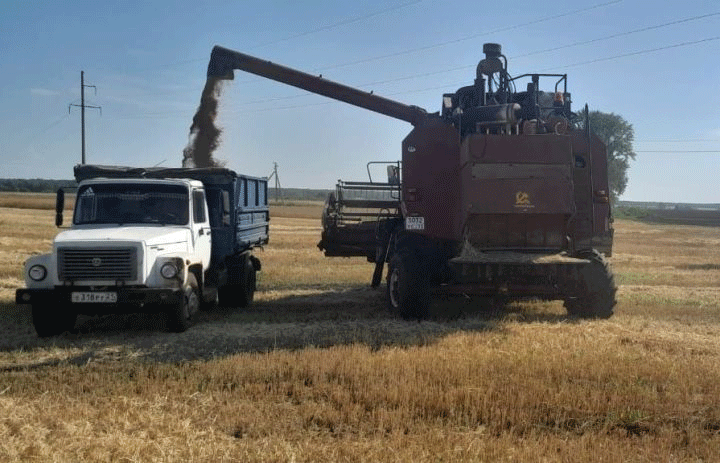
Farmers in Spassky District, including Alexey Matveev’s peasant farm in Tankeyevka village, have begun harvesting winter wheat ahead of schedule this year. An early spring and optimal weather conditions have accelerated crop development, allowing for an earlier start to the harvest season. The farmers are cultivating the DF 2020 variety, developed by Shchelkovo Agrokhim, known for its high yield potential, drought resistance, and lodging tolerance—key traits for maintaining grain quality under variable climatic conditions.
According to Dmitry Savinov, head of Spassky District’s Agriculture and Food Administration, “An early harvest combined with modern, adaptive varieties is key to a successful season.” This sentiment is echoed by regional farmers, who anticipate strong yields due to a combination of favorable weather and improved agronomic practices.
The Role of Climate and Adaptive Varieties
Recent studies highlight the increasing importance of climate-resilient wheat varieties. According to the Food and Agriculture Organization (FAO), global wheat production in 2024 is projected to reach 785 million tons, with yield improvements driven by advanced breeding techniques and precision farming. Varieties like DF 2020, which perform well under stress conditions, are becoming essential as extreme weather events become more frequent.
Data from the Russian Ministry of Agriculture indicates that regions adopting high-yielding, disease-resistant wheat varieties have seen 10-15% higher productivity compared to traditional cultivars. Additionally, early planting and harvesting strategies—like those employed in Spassky District—help mitigate risks associated with late-season droughts and heatwaves.
The early harvest in Spassky District underscores the benefits of combining adaptive wheat varieties with optimal agronomic timing. As climate variability continues to challenge farmers worldwide, the adoption of resilient cultivars and efficient farming techniques will be crucial for sustaining and increasing yields.
Error