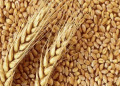
Recent reports indicate that Turkmenistan has been actively harvesting wheat, with grains being transported to storage facilities and elevators under controlled conditions to prevent spoilage. According to FAO (2023), proper post-harvest handling can reduce grain losses by up to 30%, a critical factor for food security. The liberated wheat fields are now undergoing tillage and seedbed preparation for the next crop cycle.
Cotton Cultivation and Agronomic Practices
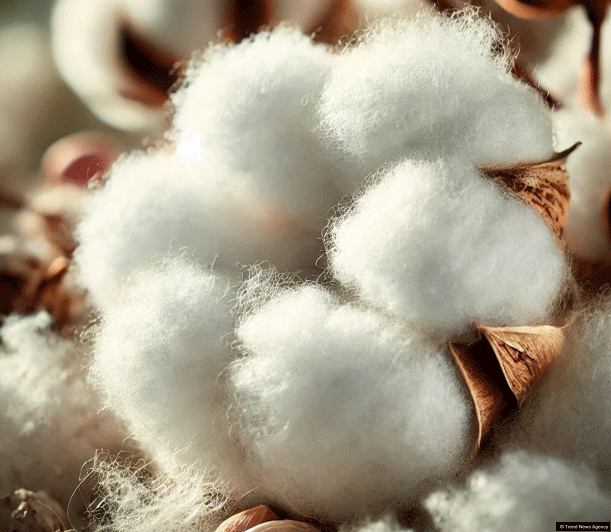
Cotton remains a key export crop for Turkmenistan, with farmers implementing inter-row cultivation, precision irrigation, and balanced fertilization. Research from ICAC (2024) shows that optimized nutrient application can increase cotton yields by 15-20%. Additionally, the Mary region is advancing sugar beet sowing, diversifying crop production.
Infrastructure and Policy Support
The government is also accelerating rural infrastructure projects to support agricultural productivity. President Berdimuhamedov stressed the importance of pre-planting seed treatment for wheat and secondary crops, a practice proven to enhance germination rates by up to 25% (Journal of Agronomy, 2023).
Turkmenistan’s strategic focus on wheat and cotton, backed by improved agronomic practices and infrastructure, positions the country for a stronger harvest season. By adopting modern techniques in irrigation, fertilization, and seed treatment, farmers can achieve higher yields and sustainable production.
Error