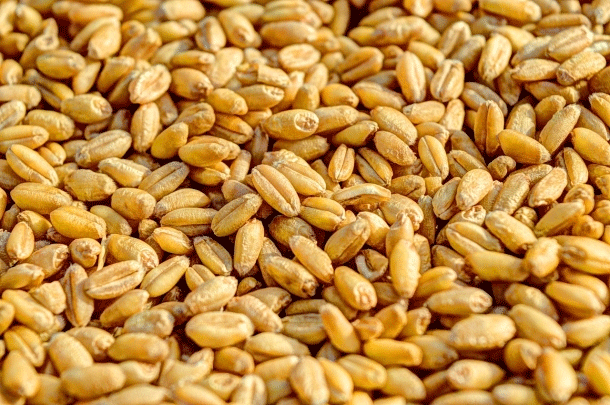
From July 9, 2025, Russia will reduce its wheat export duty from 56.3 RUB/ton to zero, marking the first removal since the grain damper mechanism was introduced in June 2021 (Ministry of Agriculture). Meanwhile, corn tariffs will increase by 30.1 RUB, reaching 961.7 RUB/ton, while barley remains duty-free.
Key Price Indicators and Market Trends
The duties are calculated based on indicative prices:
- Wheat: $228.7/ton ($2 lower than the previous week)
- Barley: $195.1/ton
- Corn: $232.6/ton
Floating grain tariffs are determined by export prices and the ruble’s exchange rate. In early 2025, wheat duties peaked at nearly 5,000 RUB/ton before plummeting 80-fold over six months.
Export Decline and Economic Impact
According to the Russian Grain Union, wheat exports in June 2025 totaled 1.12 million tons—four times lower than June 2024. For the entire 2024/25 season (July–June), exports fell by nearly a third, to 41.5 million tons.
The Russian Audit Chamber reported that 2024 grain export duties (wheat, barley, corn, soy, and sunflower) generated 73.2 billion RUB less than projected—141.2 billion RUB instead of 214.4 billion RUB.
Expert Opinions: Will Zero Duty Help Farmers?
- Dmitry Rylko (IKAR CEO): The zero duty was expected due to the tariff formula but warns that profitability still depends on inflation, loan costs, and other factors (Pole.rf).
- Andrey Sizov (SovEcon): The drop reflects falling global prices and ruble depreciation, not manual intervention (Bloomberg critique). He predicts duties may stay near zero for some time.
However, market conditions remain challenging—grain prices hover near production costs, offering little relief to farmers.
While the removal of wheat export duties may boost competitiveness, structural issues like high input costs and weak global demand persist. Farmers and traders must stay agile, leveraging market shifts while advocating for long-term policy stability.
Error