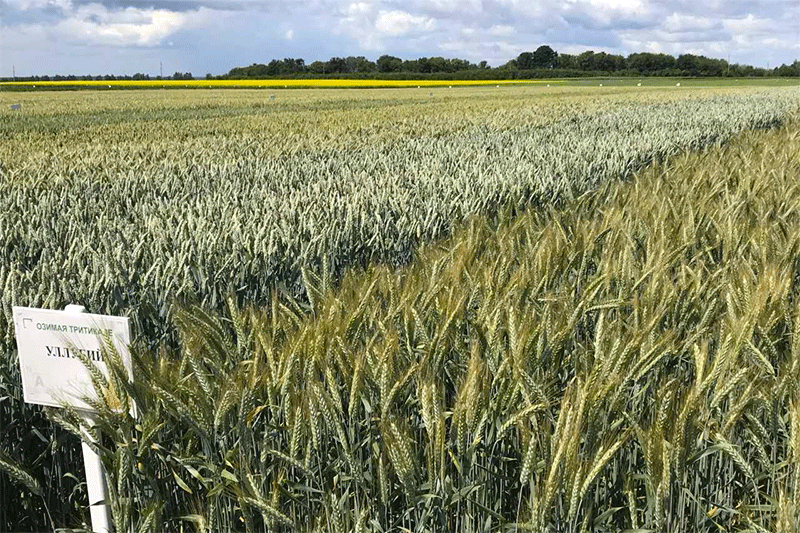
Russian agricultural science continues to make strides in developing high-yielding wheat varieties, offering farmers improved productivity and resilience. Recently, specialists from the P.P. Lukyanenko National Grain Centre presented around 30 winter wheat and triticale varieties to farmers in the Usman district of the Lipetsk region. Among the showcased varieties were well-known and new cultivars such as “Alekseich,” “Grom,” “Gomer,” “Arena,” “Fedor,” “Emma,” “Mone,” “Kop’ye,” “Donbass,” “Milasha,” and “Graf.” These varieties boast a yield potential of over 100 centners (10 metric tons) per hectare, positioning them as key players in Russia’s agricultural growth strategy.
The Shift Toward High-Yield Cultivars
According to the Lipetsk Ministry of Agriculture, 75% of the region’s winter wheat fields are now planted with Kuban-bred varieties, a significant increase from less than 20% a decade ago. This shift highlights the success of collaboration between local farmers and leading research institutions like the National Grain Centre. The adoption of these high-performance varieties has been crucial in boosting regional yields and ensuring food security.
Optimizing Cultivation Practices
Achieving 10+ tons per hectare requires precise agronomic management, including optimal sowing times, seeding rates, planting depth, and disease control. Farmers in Lipetsk regularly participate in workshops and field demonstrations to learn best practices for these new varieties. Such knowledge transfer is essential, as improper cultivation can significantly reduce potential yields.
Meeting National Agricultural Goals
Russia has set an ambitious target: a 25% increase in agricultural production by 2030, as emphasized by President Vladimir Putin. Regional Governor Igor Artamonov highlighted that enhancing crop yields, particularly through advanced wheat genetics, will be a key driver in achieving this goal. With climate-resilient and high-yielding varieties, Russian farmers are well-positioned to contribute to this national priority.
The introduction of high-yield wheat varieties from Russian breeding programs marks a significant step forward in modern agriculture. By adopting these cultivars and refining cultivation techniques, farmers, agronomists, and farm owners can substantially increase productivity, supporting both regional and national agricultural targets. Continued collaboration between scientists, policymakers, and producers will be essential to sustain this progress.
Error