

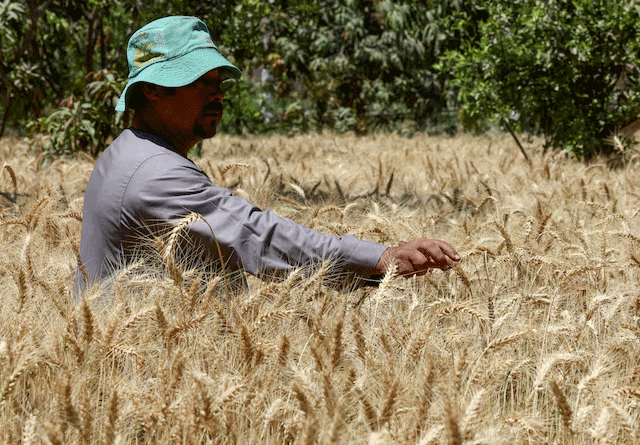
Recent government documents reviewed by Reuters reveal that Egypt has begun closing local wheat collection centers ahead of schedule as procurement falls short of expectations. The government had aimed to purchase 4 to 5 million metric tons (MMT) from an estimated 10 MMT harvest, but as of mid-season, only 3.9 MMT had been collected. This shortfall comes amid economic strains and high inflation, complicating Egypt’s efforts to maintain its subsidized bread program, which feeds 70 million people—over 60% of the population (World Bank, 2025).
Domestic Challenges and Global Market Pressures
Egypt, the world’s largest wheat importer, typically supplements its domestic supply with 5 MMT of imports annually. However, import volumes in early 2025 have lagged behind previous years, exacerbating supply concerns. Prime Minister Mostafa Madbouly has assured that strategic reserves remain sufficient for over six months, but long-term stability depends on stabilizing procurement and global trade flows.
Farmers are delivering less wheat to collection centers, prompting authorities to shut down underperforming locations. Officials note that centers receiving no wheat for 3-5 consecutive days will also close, signaling a faster-than-expected end to the harvest season.
Broader Implications for Agriculture and Trade
The shortfall highlights vulnerabilities in Egypt’s food security strategy, particularly as global wheat prices remain volatile due to the Russia-Ukraine conflict and climate-related disruptions (FAO, 2025). For farmers and agronomists, this underscores the need for:
- Higher-yielding wheat varieties to boost domestic production.
- Efficient grain storage to reduce post-harvest losses.
- Policy adjustments to incentivize farmer participation in government procurement programs.
For global markets, Egypt’s reduced purchases may soften demand temporarily, but long-term reliance on imports keeps traders alert for shifts in procurement strategies.
Egypt’s wheat procurement challenges reflect deeper systemic issues—economic pressures, reliance on imports, and farmer disengagement from state-led collection. Strengthening domestic production through sustainable farming practices and better policy frameworks will be crucial for food security. Meanwhile, global suppliers must monitor Egypt’s import patterns, as any sudden increase in demand could tighten international markets.
Error


