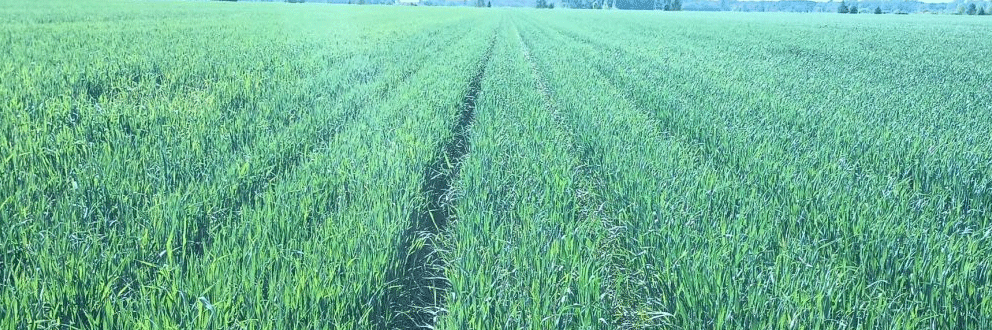
Relay cropping—sowing a second crop (like soybeans) into a standing first crop (such as winter wheat)—can boost land productivity, improve soil health, and diversify farm income. However, as one farmer’s experience shows, success hinges on precise timing, adaptable machinery, and cooperative weather.
Field Realities: Weather Delays and Soil Challenges
With only a narrow planting window, farmers face immense pressure. In this case, 20 hectares of corn remain unsown due to waterlogged, clay-heavy soil (classified as KIAW4—indicating high clay content and poor drainage). Such conditions demand aggressive tillage (e.g., scarifying) to prepare seedbeds, but forecasted rain threatens to shorten the already tight schedule.
Globally, climate volatility is worsening planting delays. According to the FAO (2023), extreme weather has reduced the suitable planting window by 10–15% in key temperate regions, forcing farmers to prioritize crops and abandon some innovations.
The Innovation Dilemma: Equipment and Time Constraints
The farmer’s relay-cropping trial—soybeans into wheat—highlights another hurdle: equipment availability. After five hours of adjustments across just 8 hectares, the team resorted to improvisation. Such setbacks are common; a 2024 USDA report notes that 60% of agri-innovations fail in scaling due to machinery mismatches or labor shortages.
Nutrient and Disease Management in a Rush
Amid the chaos, the farm applied nitrogen and Epsom salt with fungicide to protect wheat foliage from disease—a necessary risk mitigation as frequent rains increase pathogen pressure. Research from the University of Nebraska (2023) confirms that foliar magnesium (Epsom salt) can enhance stress resilience in waterlogged crops, but timing is critical.
Balancing Innovation and Real-World Farming
Relay cropping and other agronomic advancements offer tremendous potential, but their adoption is hampered by logistical, climatic, and financial barriers. Farmers must:
- Plan flexibly, allocating extra time and budget for trials.
- Invest in adaptable equipment or collaborate with ag-tech providers.
- Leverage research on stress-tolerant varieties and precision planting.
As this season proves, innovation isn’t just about ideas—it’s about persistence amid rain, mud, and machinery breakdowns.
Error