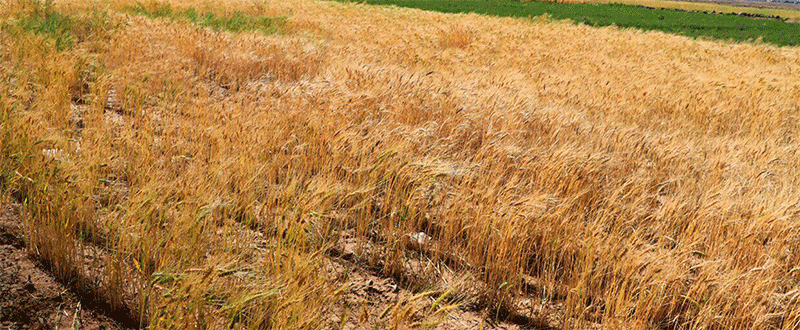
The winter wheat and legume harvest season has officially begun in Yemen’s Bani Matar district, with government officials and agricultural leaders celebrating a major milestone in the country’s fight for food security. Under the slogan “Together to Achieve Self-Sufficiency,” the event highlighted a remarkable increase in production, driven by better farming inputs, expanded cultivation, and coordinated efforts between farmers, cooperatives, and policymakers.
Record-Breaking Yields in Bani Matar
According to Yemen’s Minister of Agriculture, Dr. Radwan Al-Rubai, this year’s harvest has exceeded expectations, with wheat productivity reaching 4 tons per hectare—a significant jump from previous seasons. The total harvest is estimated at 120 tons of wheat and 50 tons of legumes, cultivated across 12,000 acres in Bani Matar alone.
These gains are attributed to:
- High-quality seeds: Improved purity and productivity of wheat varieties.
- Government support: Distribution of 10 tons of wheat seeds to farmers in the western sector.
- Cooperative efforts: Technical guidance and resources from the Western Sector Agricultural Cooperative Society.
Globally, wheat yields average around 3.5 tons per hectare (FAO, 2023), meaning Bani Matar’s performance is competitive despite Yemen’s ongoing challenges.
A Blueprint for Food Security
The Yemeni government is prioritizing legume cultivation as a foundation for a seed bank, ensuring future crop resilience. Governor Abdulbasit Al-Hadi emphasized the need to reduce import dependency, noting that expanding strategic crops like wheat is critical amid economic strain.
However, long-term success depends on:
- Sustainable water management: Groundwater availability and well-drilling initiatives.
- Farmer training: Continued support in modern techniques and inputs.
- Infrastructure investment: Reliable supply chains for seeds, equipment, and market access.
Progress Amid Challenges
Yemen’s agricultural sector is making strides despite conflict and resource limitations. The Bani Matar harvest demonstrates that localized efforts, improved seeds, and cooperative models can boost productivity. However, scaling these gains nationwide will require sustained investment, innovation, and stability.
For farmers and agronomists, this case study offers valuable insights into resilient farming practices in crisis-affected regions.
Error