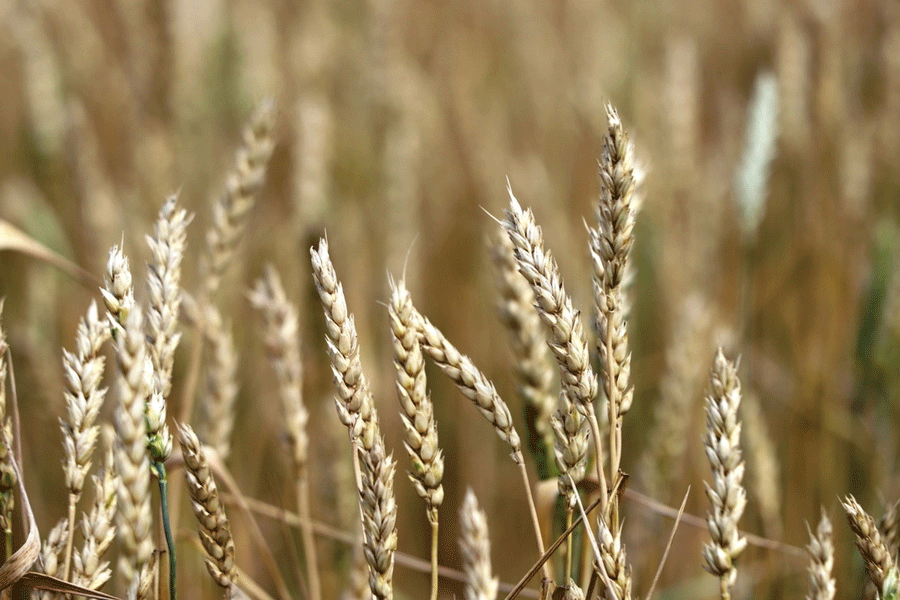
Kazakhstan, a key grain producer in Central Asia, is expecting average winter wheat yields in most southern growing regions this season, according to the latest report from Kazhydromet. However, regional variations highlight the impact of weather conditions on crop performance.
Projected Yields by Region
- Almaty Region: 14.4–25.9 quintals per hectare (q/ha)
- Zhambyl Region: 14.4–19.8 q/ha
- Turkistan Region: 14.3–33.1 q/ha (with some districts exceeding norms)
- Zhetysu Region: 14.8–23.9 q/ha
Notably, the Karatalsky district (Zhetysu Region) is expected to see below-average yields (12.1–14.1 q/ha) due to rainfall deficits during critical growth stages (stem elongation and heading).
Areas with Above-Average Potential
In Turkistan Region, several districts are predicted to outperform:
- Arys, Kazygurt, Ordabasy, and Saryagash districts are forecasted to yield 15.4–26.8 q/ha, thanks to favorable moisture conditions.
Broader Context: Climate and Agricultural Resilience
Globally, climate variability continues to challenge wheat production. According to the FAO, Central Asia’s wheat-dependent economies must adopt drought-resistant varieties and precision irrigation to mitigate risks (FAO, 2023). Kazakhstan’s current projections align with long-term climate trends, where southern regions experience increasing aridity.
While Kazakhstan’s winter wheat yields are expected to remain near historical averages, regional disparities underscore the need for adaptive farming practices. Farmers in drought-prone areas should prioritize water-efficient technologies and soil moisture retention strategies to safeguard productivity.
Error