

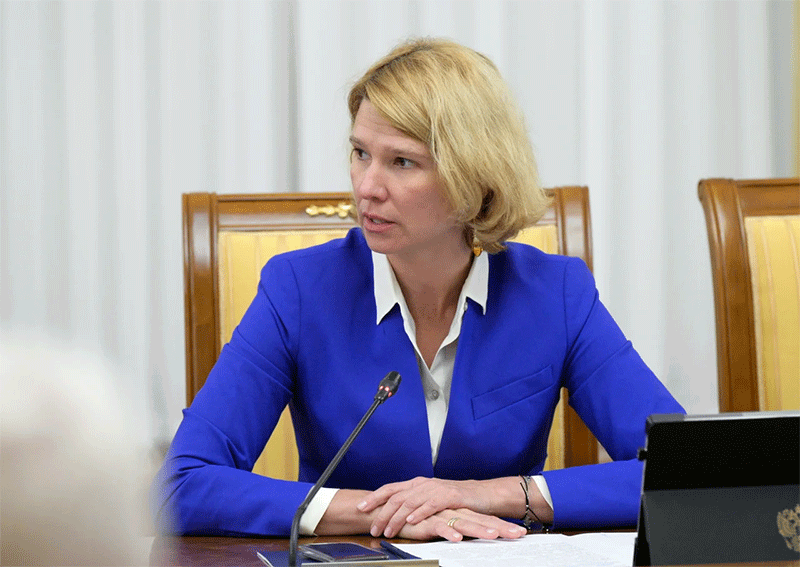
Russian Agriculture Minister Oksana Lut recently addressed the challenges in gaining Chinese market access for Russian winter wheat and barley, calling it a “very difficult issue.” According to Lut, Chinese authorities remain skeptical about these crops, citing unspecified concerns: “They don’t like winter wheat and winter barley. They see something wrong with them,” she told reporters.
Trade Realities and Market Dependencies
While China is a major global wheat importer (projected to reach 10.5 million metric tons in 2023/24, per USDA), it has not been a key buyer of Russian wheat. Lut emphasized that China is “not a primary market” for Russian exports, hinting at stronger opportunities elsewhere. Indeed, Russia—the world’s top wheat exporter—shipped over 47 million tons in 2023, with Egypt, Turkey, and Bangladesh as leading destinations (FAO 2024).
Why the Chinese Hesitation?
Though unstated, China’s caution may stem from:
- Phytosanitary standards: Strict controls on pests like Tilletia controversa (dwarf bunt) in winter wheat.
- Geopolitical trade balancing: China diversifies suppliers (Australia, France, Kazakhstan) to mitigate risks.
- Domestic stockpiling: China’s wheat reserves hit 130 million tons in 2024 (National Grain and Oils Information Center), reducing import urgency.
Russia’s Alternatives
With China’s market access delayed, Russia is pivoting to:
- Africa and the Middle East: Demand in Algeria, Sudan, and Iran surged by 18% in 2023 (ITC Trade Map).
- New agreements: Talks with Indonesia and Pakistan for grain deals could offset losses.
While China’s reluctance poses a short-term hurdle, Russia’s diversified export strategy minimizes reliance on a single market. For farmers and agronomists, this underscores the need to adapt to shifting trade landscapes and prioritize crops meeting global phytosanitary benchmarks.
Error

