• About
  • Advertise
  • Careers
  • Contact
Friday, December 5, 2025
  • Login
No Result
View All Result
Field Crops news
  • Home
  • News
  • AgroTech & Innovation
  • Science
  • Sustainability
  • Market News
  • Research & Development
  • Home
  • News
  • AgroTech & Innovation
  • Science
  • Sustainability
  • Market News
  • Research & Development
No Result
View All Result
Field Crops news
No Result
View All Result
Home Harvest

Early Barley Harvest in Crimea: Climate Challenges and Promising Wheat Yields

by Tatiana Ivanova
24 June 2025
in Harvest, News, Сrop protection
0
Early Barley Harvest in Crimea: Climate Challenges and Promising Wheat Yields
0
SHARES
1
VIEWS
Share on FacebookShare on Twitter

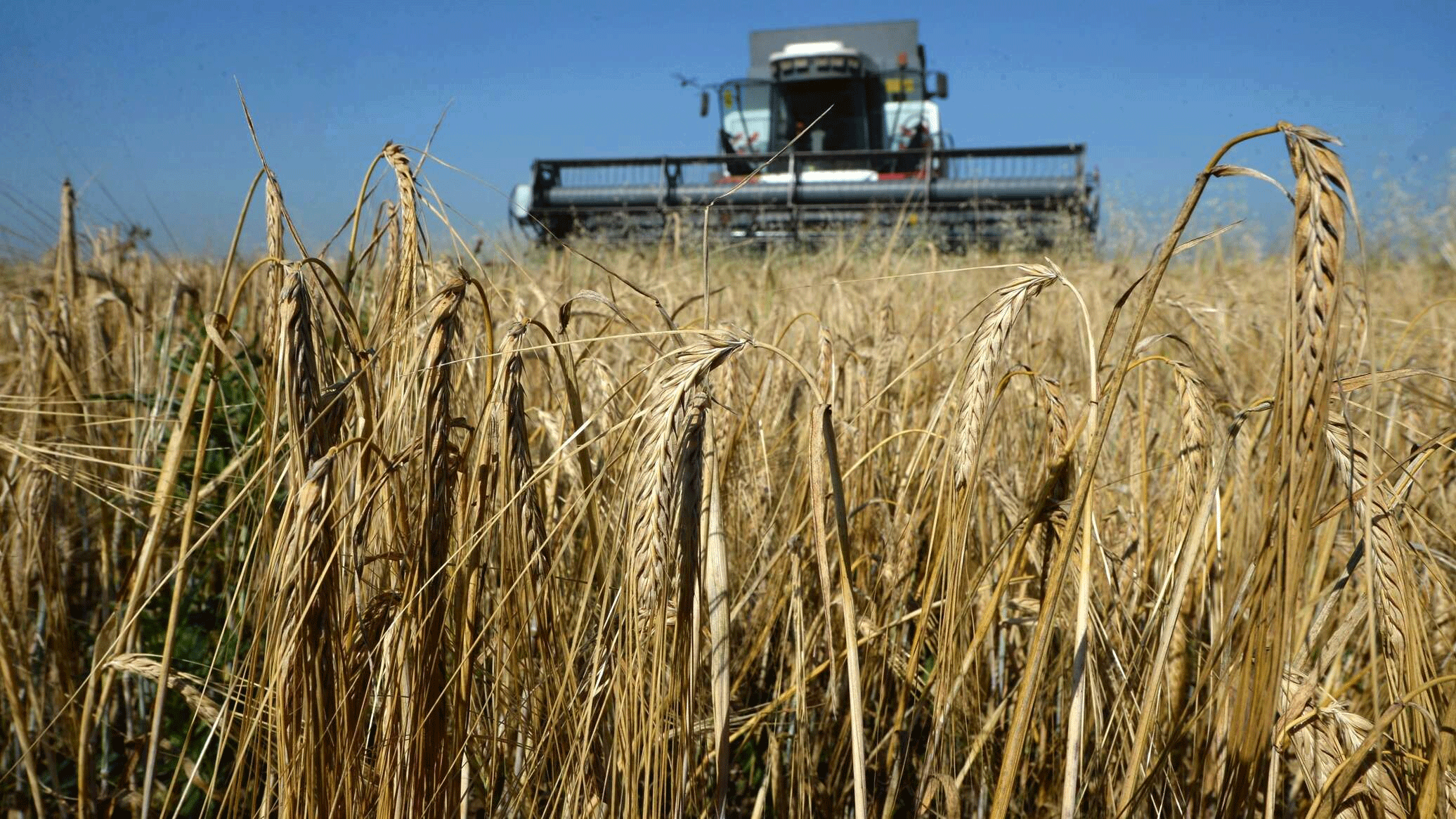
This year, Crimea’s barley harvest began earlier than usual due to a combination of spring frosts and prolonged drought. Such climatic conditions have disrupted traditional growing cycles, forcing farmers to adapt quickly. According to the Azov-Black Sea Branch of the Central Office for Crop Quality Assessment (ЦОК АПК), the region is already preparing for the first grain samples, with director Andrey Ryumshin confirming readiness for testing.

State Monitoring and Wheat Projections

State grain monitoring in Crimea will commence in the second decade of June, focusing on both barley and the upcoming wheat harvest. Despite weather challenges, preliminary estimates suggest the region’s wheat output could surpass 900,000 metric tons—a critical volume for local and national food security.

Rigorous Quality Control Measures

To ensure grain meets market standards, the Azov-Black Sea Branch plans to collect 1,250 samples and conduct 24,000 laboratory tests, analyzing key parameters such as protein content, moisture levels, and gluten quality. These efforts align with global trends, where climate volatility has increased the need for precise crop assessments (FAO, 2023).

While early harvests signal adaptation to climate extremes, Crimea’s agricultural sector remains resilient, with strong wheat production forecasts. However, consistent monitoring and advanced testing are essential to maintain grain quality and competitiveness.

Error

Tags: agricultural monitoringbarley harvestclimate adaptationCrimeacrop yielddroughtfood securityfrostGrain QualityWheat production

Tatiana Ivanova

Next Post
Contaminated Barley Shipments Raise Alarm: Pesticide Risks in Animal Feed Demand Stricter Controls

Contaminated Barley Shipments Raise Alarm: Pesticide Risks in Animal Feed Demand Stricter Controls

Newsletter

Catastrophic Weather Hits French Grain Production, Threatening Global Wheat Supply

Catastrophic Weather Hits French Grain Production, Threatening Global Wheat Supply

7 August 2024

Russia’s Wheat Prices Set to Rise Sharply: Low Yields, Export Duties, and Farmer Exit Fuel Market Shift

31 March 2025

Decoding Maize Domestication: Unveiling the Genetic Blueprint Behind Modern Corn

20 February 2025

CABI assists the Philippines in assessing the impact of fall armyworm in rice

19 August 2024

Boosting Azerbaijan’s Agriculture: Russian-Bred Wheat and Soybean Seeds Offer High-Yield Potential

18 May 2025

Revolutionizing Weed Management in Cereal Crops: Edaptis®’ Dual-Action Solution

18 December 2024

Innovative Super Grains: Enhancing Siberian Agriculture with Climate-Resilient Varieties

26 October 2024

Evaluation of phyllosphere bacterial biocontrol agents for the suppression of rice foliar diseases

6 August 2024

Feedgrain Values in South-Eastern Australia Bolstered by Grazier Demand

1 July 2024

Bulgarian Government Allocates 116 Million BGN for Livestock Farmers in 2023

24 June 2024
  • About
  • Advertise
  • Careers
  • Contact
Call us: +51 93 999 5140

© 2020-2024 Field Crops news

Welcome Back!

Login to your account below

Forgotten Password?

Retrieve your password

Please enter your username or email address to reset your password.

Log In
No Result
View All Result
  • Home
  • News
  • Science
  • Sustainability
  • AgroTech & Innovation
  • Market News
  • Science
  • Research & Development
  • About
  • Contact

© 2020-2024 Field Crops news