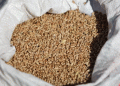

Gangjin County in South Korea is making waves in agricultural innovation by aggressively promoting black soybean (Seoritae) cultivation, particularly the new high-yielding variety ‘Cheongja No. 5’. Developed by the Rural Development Administration (RDA), this variety boasts 30% higher yields compared to traditional black soybeans, along with improved resistance to disease and lodging. Its mechanization-friendly traits make it ideal for paddy field conversion, addressing both rice overproduction and farmer income challenges.
Record Expansion in Cultivation
This year, Gangjin’s black soybean cultivation surged to 180 hectares, a sixfold increase from 2023. Contracts with food processors like Doobo Food Co. and Gyeonggi-based confectionery firms have secured stable demand. The county initially targeted 700 hectares for all paddy soybeans but has already exceeded that with 781 hectares planted, of which 30% is black soybean—a figure expected to grow due to its higher profitability over conventional white soybeans.
Why ‘Cheongja No. 5’ Stands Out
- 30% higher yield: Thicker pods that resist shattering.
- Health and market appeal: Rich in protein and antioxidants, linked to metabolic disease prevention—a key selling point for food manufacturers.
- Mechanization-ready: Reduces labor costs, critical for aging rural communities.
Government Support Driving Adoption
Gangjin County offers substantial subsidies to incentivize farmers:
- Strategic Crop Direct Payment: ₩2–3.5 million/ha (~$1,500–2,600).
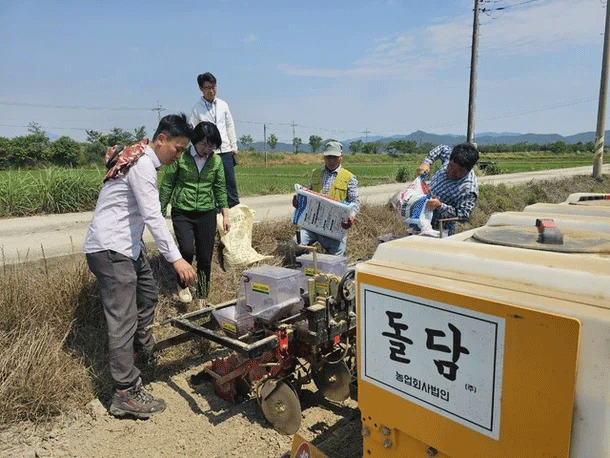
- County-level grants: Up to ₩4 million/ha (~$3,000) for equipment like specialized seeders and combines.
- Rental machinery programs: Helping small-scale farmers access technology.
County Mayor Gang Jin-won emphasized, *“Black soybeans like ‘Cheongja No. 5’ are a viable solution to falling rice prices. We’ll keep supporting farmers in production and distribution to ensure long-term success.”*
A Win-Win for Farmers and the Industry
Gangjin’s model demonstrates how diversification into high-value crops can stabilize farm incomes while balancing grain supply. With rising global demand for plant-based proteins, black soybeans present a strategic opportunity for agronomists and farmers alike. Continued investment in R&D, mechanization, and market linkages will be crucial to replicating this success elsewhere.
Error