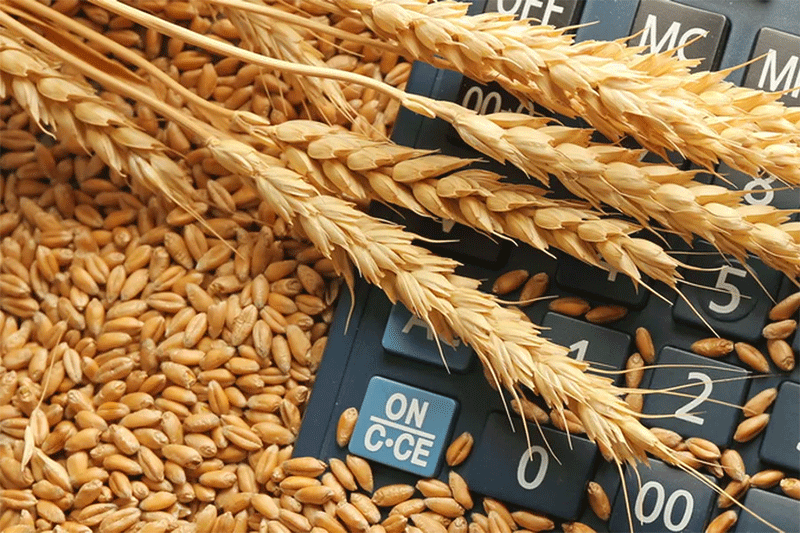
Russia’s Ministry of Agriculture has announced a significant reduction in wheat export duties, dropping from 1,023.5 rubles/ton to 652.5 rubles/ton as of June 11—a 1.6-fold decrease. Meanwhile, corn export duties fell to 359.9 rubles/ton (from 506.1 rubles), while barley duties remained at zero.
The new rates, calculated based on indicative prices ($240.5/ton for wheat, $204/ton for barley, and $220.9/ton for corn), will remain in effect until June 17. Further adjustments for the period of June 18-24 will be announced later.
Why This Matters for Global Agriculture
- Competitiveness in Global Markets – Lower duties could make Russian wheat more attractive, increasing its export volume and pressuring global prices. According to the USDA, Russia remains the world’s top wheat exporter, with 2024/25 exports projected at 52 million tons.
- Domestic Farm Economics – The floating duty mechanism, introduced in 2021, aims to stabilize domestic prices while subsidizing farmers. The recent increase in base prices (18,000 rubles/ton for wheat, 16,875 rubles/ton for barley and corn) reflects inflationary adjustments.
- Market Volatility Risks – Geopolitical tensions and currency fluctuations (rubles vs. USD) add uncertainty. Analysts at S&P Global Commodity Insights warn that further duty cuts could disrupt price trends in key import markets like Egypt, Turkey, and Africa.
Russia’s latest export duty reduction may boost its wheat shipments, but the long-term impact hinges on global demand, weather conditions, and trade policies. Farmers and agribusinesses should monitor these changes closely to adjust procurement and pricing strategies.
Error