
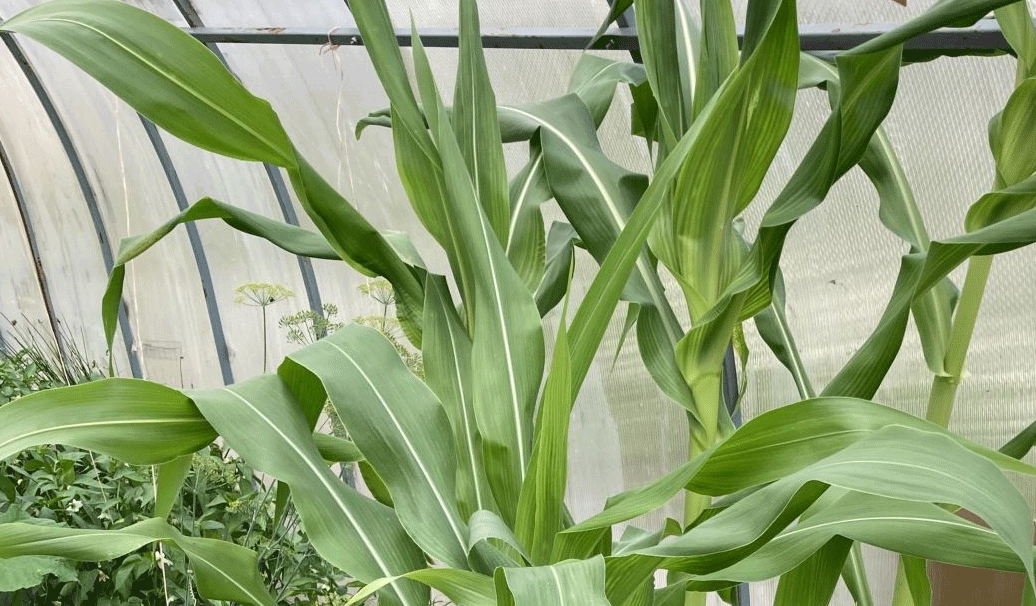
For decades, corn (Zea mays) was considered unsuitable for the cold climates of Russia’s Komi Republic. However, rising temperatures and longer growing seasons are reshaping agricultural possibilities in the region. In 2025, Komi will plant corn on 78 hectares—a modest but significant step toward diversifying feed crops for livestock.
Why Corn? The Science Behind Silage
Corn silage is a high-energy feed for dairy and beef cattle, prized for its optimal balance of starch (30–40%) and digestible fiber (NDF 40–45%) (University of Wisconsin-Madison, 2023). In Komi, where forage options are limited, corn’s rapid growth—up to 5 cm per day under the region’s long daylight hours—makes it a promising candidate.
Climate Change as a Catalyst
The Komi Ministry of Agriculture attributes this shift to a 15% increase in average summer temperatures since 1990 (Roshydromet, 2024), extending the vegetative period by 20 days. Similar trends are observed in Scandinavia, where maize trials have succeeded up to 60°N latitude (Swedish University of Agricultural Sciences, 2023).
From Past Failures to Future Potential
Historical attempts in the 1950s–1990s yielded mixed results, with yields ranging from 100 to 1,000 centners/ha depending on soil management. Today, improved cold-tolerant hybrids like Ross 140 SV and Zolotoy Pochatok (developed by Rossorgo Institute) offer better adaptability.
Government and Research Backing
A 2025 agreement between Komi’s Ministry of Agriculture and Rossorgo aims to test sorghum-sudangrass hybrids and corn in demo plots. Success could lead to wider adoption, reducing reliance on imported feed.
A Cautious but Promising Experiment
While challenges remain—particularly in soil fertility and pest management—Komi’s corn revival reflects a broader trend of climate-driven agricultural adaptation. With careful agronomic practices, this crop could bolster the region’s feed security and open doors for other warm-season plants.
Error