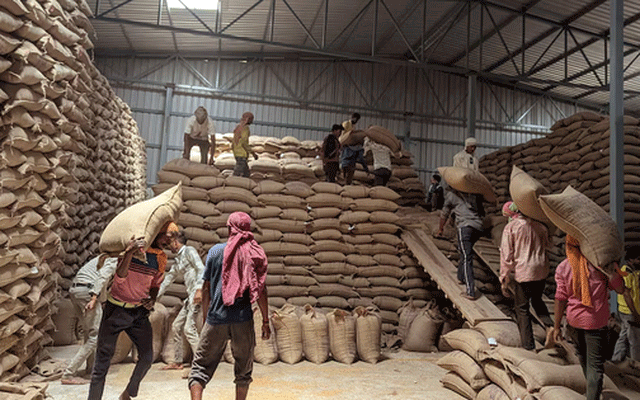
In 2022, India shocked global agricultural markets by banning wheat exports due to drought, dwindling reserves, and record-high domestic prices. Experts feared the world’s second-largest wheat consumer might need imports for the first time since 2017. However, the latest data reveals a dramatic turnaround: India’s 2024 wheat harvest is projected to exceed last year’s output by 4 million metric tons, reaching 112 million tons (USDA, May 2024).
From Scarcity to Surplus
The Food Corporation of India (FCI) has procured 29.7 million tons of new-season wheat from farmers—the highest in four years—bolstered by favorable weather, high-yielding climate-resistant seeds, and residual soil moisture from last year’s strong monsoon. With carryover stocks of 11.8 million tons, India’s total reserves could reach 44 million tons, far exceeding the 18.4 million tons needed for its massive food welfare program serving 800 million people.
Amit Takkar of Conifer Commodities notes, “After years of struggle, India’s wheat sector is finally recovering, eliminating import risks.”
Global Price Pressures
India’s self-sufficiency comes as global wheat prices have halved since their 2022 peak, hitting a near five-year low in early 2024 (FAO). Major exporters like Argentina, Australia, and Canada continue strong production, while top importer China’s demand weakens. If India abstains from imports, prices could drop further, squeezing farmers in export-reliant economies.
Farmers Reap Benefits
In Madhya Pradesh—known for premium pizza and pasta wheat—farmers report 10–15% higher yields due to milder March temperatures. Rising domestic wheat prices (up 15% YoY) also incentivized planting. Meanwhile, India’s government has no plans to lift its 40% wheat import tax or allow exports, prioritizing reserve stockpiles instead.
India’s wheat rebound underscores the volatility of global agri-markets, where weather and policy shifts can swiftly alter trade dynamics. While Indian farmers and food security programs benefit, exporters face renewed price pressures. Stakeholders must adapt to these fluctuations through diversified supply chains and resilient crop strategies.
Error