
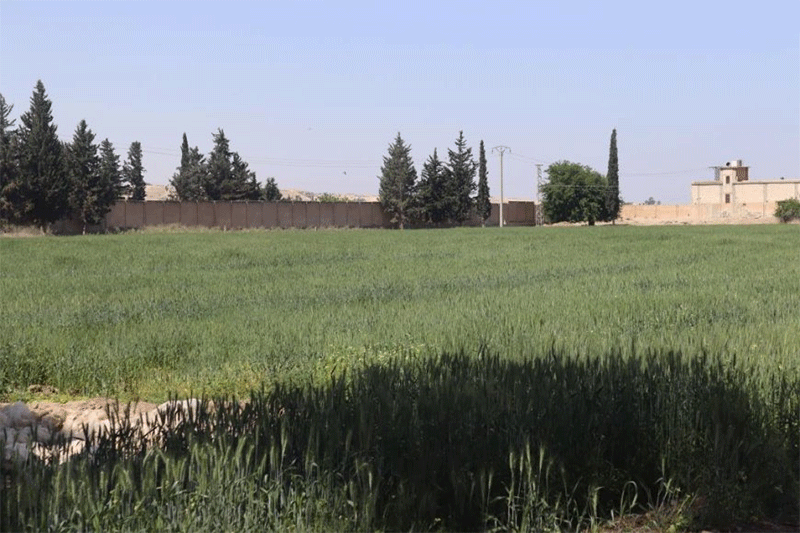
As the harvest season approaches in Raqqa, farmers are preparing for what the Agriculture and Livestock Prevention Committee predicts will be a good year for irrigated wheat. However, drought has devastated rain-fed crops, and rising fuel and irrigation costs threaten to undermine profitability. Farmers are now demanding higher prices to offset their expenses, while agricultural engineers highlight both opportunities and risks in the coming weeks.
Mechanical Readiness and Rising Harvesting Costs
Farm machinery owners are servicing combines ahead of the harvest. Abdullah Al-Hussein, a combine owner in eastern Raqqa, explains: “We’re repairing and replacing damaged parts to ensure machines are operational. But this year is tougher—diesel and oil prices have surged, and rain-fed yields are near zero.”
Last year, harvesting costs were around $8 per dunam (0.1 hectare), but this year’s rates remain uncertain due to fuel inflation. Farmers are urging the Autonomous Administration to provide subsidized diesel to keep operations viable.
Farmers Demand Fair Pricing Amid Rising Input Costs
Jassim Al-Hussein, a wheat farmer, voices widespread frustration: “Production costs are soaring, yet market prices don’t cover expenses. We need better prices to make even a small profit.” Last year, wheat was purchased at $0.31/kg, but with global wheat prices fluctuating (currently ~$230/ton for benchmark futures as of mid-2024, according to the World Bank), local pricing policies must adapt.
Drought Devastates Rain-Fed Wheat, Pests Threaten Irrigated Crops
Hamoud Al-Khalaf, head of Raqqa’s Agricultural Prevention Committee, confirms that rain-fed wheat production has dropped to 0% due to severe drought—a growing concern as climate change exacerbates arid conditions in Syria. Meanwhile, the sunn pest has infested 100,000 dunams (10,000 hectares), threatening grain quality.
Despite these challenges, irrigated wheat shows promise. Al-Khalaf notes: “Plant density, spike formation, and grain fill are strong. If pollination is supported by humid westerly winds, yields could surpass last year’s.” However, late-season irrigation in May is risky, potentially stressing crops if not carefully managed.
Policy Adjustments and Market Realities
The Autonomous Administration of North and East Syria procured 1 million tons of wheat in 2023–2024, but this year’s output hinges on balancing irrigation efficiency, pest control, and fair pricing. With global food security pressures, local policies must incentivize farmers to sustain production.
A Season of Cautious Hope
Raqqa’s irrigated wheat could deliver a strong harvest, but farmers’ profitability depends on addressing fuel costs, pest outbreaks, and pricing fairness. As climate variability intensifies, long-term solutions—like drought-resistant seeds and efficient irrigation—are critical. For now, all eyes are on the weather and policy responses in the crucial weeks ahead.
Error