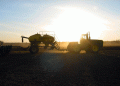


A vessel carrying 28,500 tonnes of wheat recently docked at Syria’s Tartous port, one of the first significant trade deliveries since the EU and U.S. lifted economic sanctions on the war-torn nation. This development follows years of severe restrictions that crippled Syria’s agricultural sector, which once contributed around 20% of GDP before the civil war (FAO, 2023).
EU Sanctions Lifted, But Some Restrictions Remain
The European Council formalized the decision to end most economic sanctions, allowing Syrian banks, including the Central Bank of Syria, to reconnect with European financial markets. This move is expected to revive agricultural trade, improve access to fertilizers and machinery, and stimulate food production. However, asset freezes and travel bans on individuals linked to the former Assad government remain until June 2026, alongside new human rights sanctions.
Impact on Global Wheat Markets and Food Security
Syria was once a moderate wheat exporter, producing up to 4.1 million tonnes annually before the war (USDA, 2023). However, years of conflict slashed production to just 1.2 million tonnes in 2022, forcing heavy reliance on imports. The lifting of sanctions could help rebuild Syria’s agricultural capacity, potentially easing pressure on global wheat supplies, especially as Ukraine and Russia remain key but unstable exporters.
Opportunities for Agribusiness and Reconstruction
With sanctions eased, international agribusinesses, seed suppliers, and farm machinery manufacturers may find new opportunities in Syria’s reconstruction. The country’s fertile Euphrates Valley could regain productivity with proper investment in irrigation and technology. Additionally, EU and U.S. development agencies may increase funding for agricultural recovery programs.
A Step Toward Stability, But Challenges Remain
The wheat shipment symbolizes hope for Syria’s agricultural revival, but logistical hurdles, damaged infrastructure, and lingering sanctions pose challenges. For global farmers and agronomists, monitoring Syria’s recovery could reveal new trade openings or shifts in wheat market dynamics. If stability continues, Syria may gradually re-enter the global agricultural economy—benefiting both its people and international markets.
Error