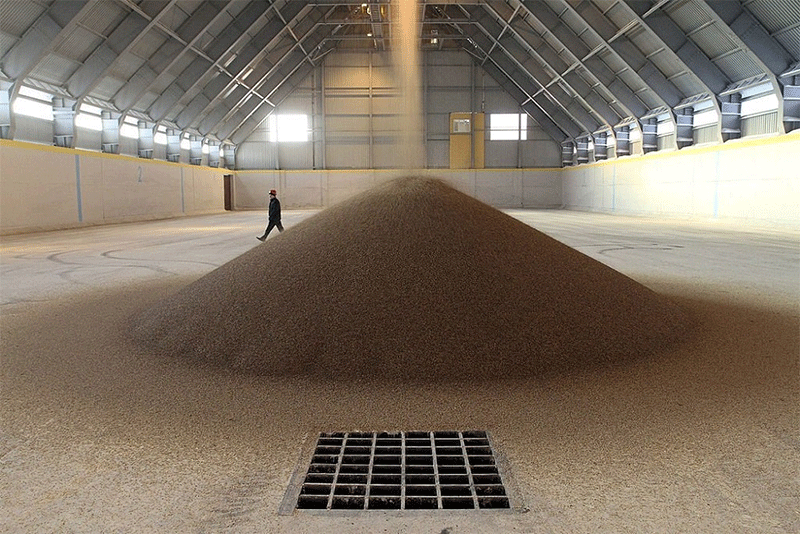
On Tuesday, May 20, grain sales from Russia’s state intervention fund fell sharply to a new record low of only 540 tons, according to data from the National Commodity Exchange (NTB). This marks a significant drop from the 4,050 tons sold just a day earlier and continues a concerning trend of declining state grain auctions.
Key Details from the Latest Auction:
- Only one lot was sold: soft wheat (3rd class, “triple”) from the 2021 harvest—a rare occurrence in recent trading.
- The wheat originated from Volgograd Oblast, selling for 8.53 million rubles at an average price of 15,840 rubles per ton.
- Just one contract was signed for the entire lot.
This follows the previous record low set on May 14, when only 945 tons of the same class and harvest year were sold under similar conditions.
Broader Market Trends
Russia’s grain intervention mechanism, designed to stabilize domestic prices, has seen fluctuating demand since its relaunch in August 2023. After a pause in late December, sales resumed in January 2024, but volumes remain weak.
Total sales so far:
- 192,780 tons of grain sold
- 2.85 billion rubles in revenue
Why Are Sales Declining?
Several factors may explain the slump:
- Strong Export Demand: Russian wheat remains competitive globally, reducing domestic reliance on state reserves.
- Price Discrepancies: Intervention prices may no longer align with market expectations.
- Quality Concerns: Buyers may prefer fresher harvests over older stock (e.g., 2021 wheat).
What Does This Mean for Farmers and Agribusiness?
- Farmers may face reduced price support if state interventions lose effectiveness.
- Traders and processors could see greater price volatility if government stocks play a smaller role.
- Global markets may feel pressure if Russia prioritizes exports over domestic sales.
The continued decline in Russia’s grain intervention sales highlights shifting market priorities—away from state-backed mechanisms and toward global trade dynamics. Farmers and agribusinesses should monitor these trends closely, as they may influence pricing strategies, storage decisions, and export opportunities in the coming months.
Error