

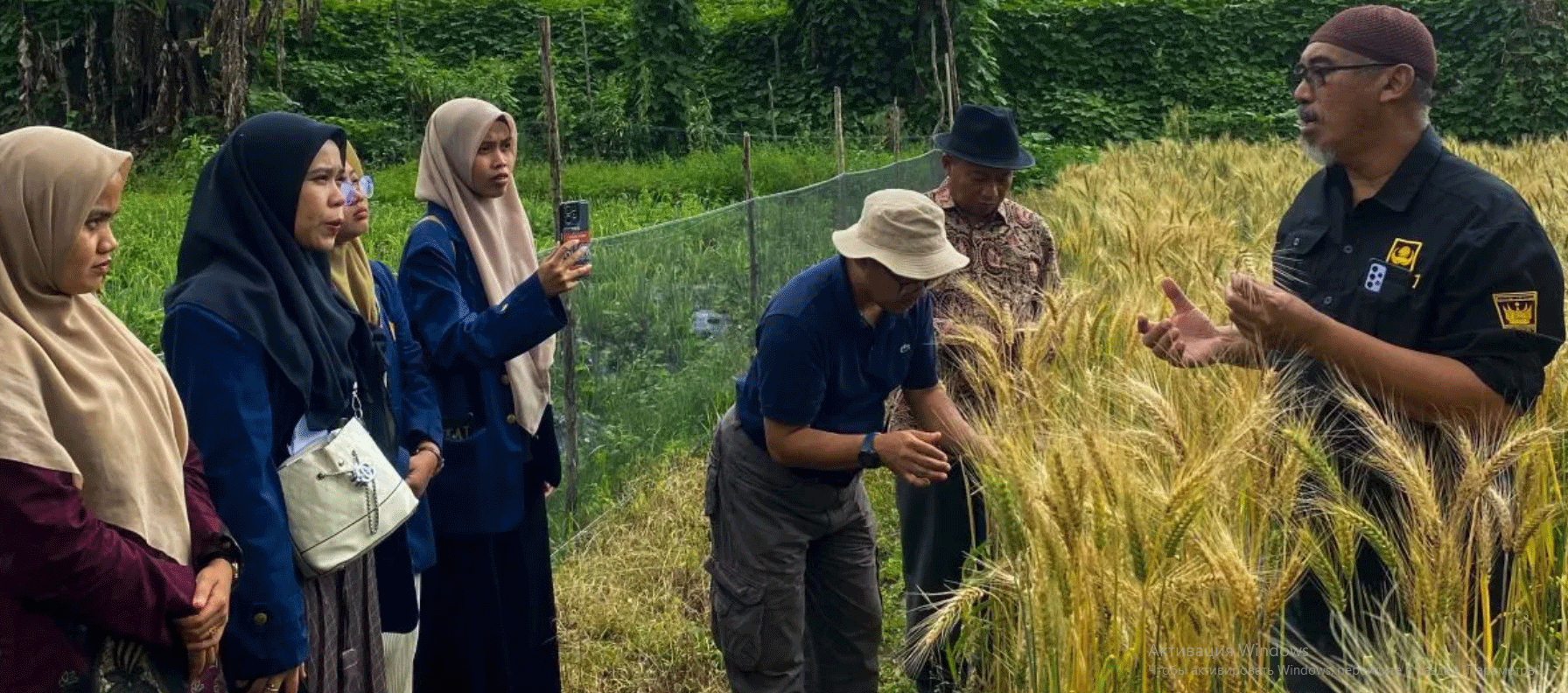
Indonesia remains heavily dependent on wheat imports, bringing in around 12 million tons per year at a cost of $10 billion USD, according to Andalas University Rector Efa Yonnedi. This reliance on foreign wheat strains poses a significant risk to national food security, prompting the Ministry of Agriculture and the Ministry of Education, Science, and Technology to push for advanced domestic wheat research.
Andalas University’s Breakthrough: GURI-6 Wheat Variant
Andalas University (Unand) in West Sumatra has made strides in wheat research, developing a new high-yielding variety called GURI-6 (Gandum Untuk RI 6). However, current limitations restrict its cultivation to high-altitude regions (above 800 meters above sea level). The next challenge? Adapting this variety to lowland areas through collaborative research.
Globally, climate-resilient wheat varieties have been a major focus, with countries like Australia and India developing heat- and drought-tolerant strains. If Indonesia succeeds in creating a lowland-adapted wheat variety, it could mirror the success of Brazil’s Cerrado wheat, which transformed the country into a self-sufficient wheat producer in certain regions.
The Economic and Food Security Impact
A domestically viable wheat strain would:
- Reduce the $10 billion annual import burden
- Boost farmer incomes by creating a new cash crop
- Enhance food sovereignty, reducing vulnerability to global supply shocks
A Call for Collaborative Innovation
Indonesia’s wheat research marks a crucial step toward agricultural independence. With continued investment and cross-institutional collaboration, the dream of localized wheat production could become a reality—transforming farmers’ livelihoods and securing the nation’s food future.
Error