
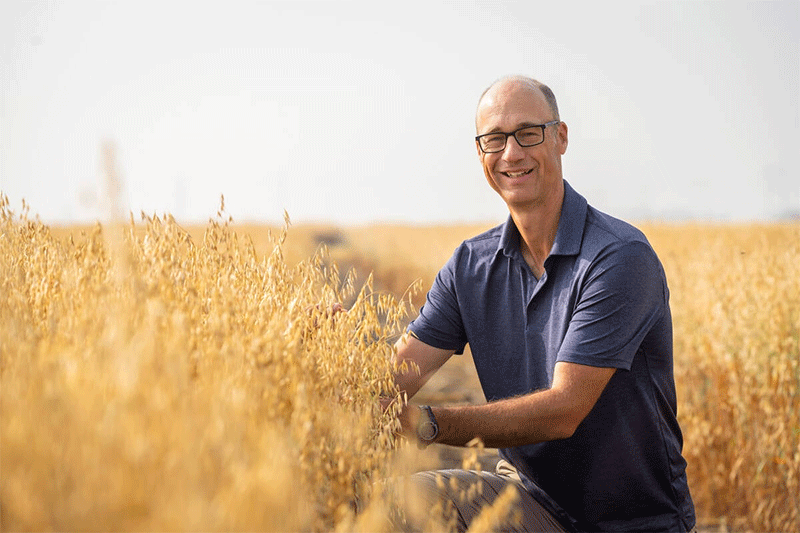
Oat farmers across the Canadian Prairies may soon have a powerful new tool in their fields—OT3125, a high-yielding oat variety developed by the University of Saskatchewan’s Crop Development Centre (CDC).
Consistent Outperformance in Trials
Over the past two years, OT3125 has consistently outyielded top commercial varieties like CDC Arborg, AC Morgan, and AC Summit by 7%—a substantial margin in agriculture, where even a 1-2% yield gain can make a difference in profitability.
“We don’t see that kind of jump too often,” says Aaron Beattie, oat and barley breeder at the CDC. “Maybe once every 10 years we’ll get something with that big of a yield jump.”
Strong, Lodging-Resistant, and Adaptable
Derived from parent lines with shorter straw and high yield potential, OT3125 also inherits strong lodging resistance, a critical trait for maintaining harvest quality under adverse weather.
Unlike genetically modified crops, OT3125 was developed using traditional plant breeding, relying on natural genetic recombination rather than gene editing.
Prairie-Wide Suitability
While current leading oat varieties dominate regionally (Summit in Manitoba, Arborg in Saskatchewan, Morgan in Alberta), OT3125 has shown consistent performance across all soil zones, making it a versatile choice for farmers.
Next Steps: Commercialization & Naming
With registration approved in February 2024, FP Genetics will handle seed multiplication and marketing. The variety is expected to hit the market in 2-3 years, following naming—possibly continuing FP Genetics’ tradition of honoring service members (e.g., CDC Anson, named after an RCMP officer).
A Bright Future for Oat Farmers
OT3125 represents a rare leap forward in oat breeding, offering higher yields, better lodging resistance, and broad adaptability—key factors for improving farm profitability. As climate variability and input costs rise, such innovations are crucial for sustainable agriculture.
For farmers, agronomists, and seed producers, OT3125 could soon become the go-to oat variety, reinforcing the importance of continued investment in traditional plant breeding.
Error