• About
  • Advertise
  • Careers
  • Contact
Thursday, January 29, 2026
  • Login
No Result
View All Result
Field Crops news
  • Home
  • News
  • AgroTech & Innovation
  • Science
  • Sustainability
  • Market News
  • Research & Development
  • Home
  • News
  • AgroTech & Innovation
  • Science
  • Sustainability
  • Market News
  • Research & Development
No Result
View All Result
Field Crops news
No Result
View All Result
Home News

Chlormequat in Oats: Rising Residue Levels and What Farmers & Agronomists Should Know

by Tatiana Ivanova
13 May 2025
in News, Сrop protection
0
Chlormequat in Oats: Rising Residue Levels and What Farmers & Agronomists Should Know
0
SHARES
8
VIEWS
Share on FacebookShare on Twitter

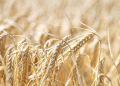
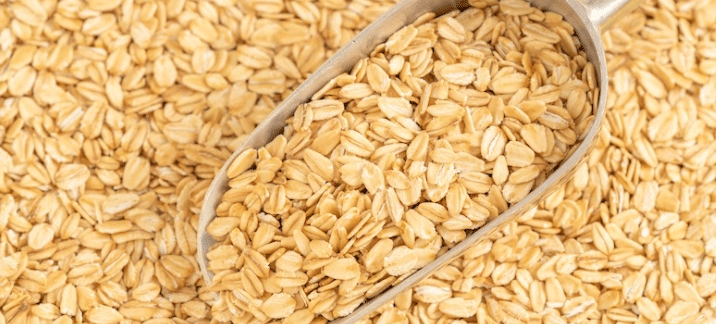
Chlormequat chloride is a plant growth regulator (PGR) widely used in cereal crops like oats, wheat, and barley to prevent lodging—a condition where stems bend or break, reducing yield and harvest efficiency. While it improves crop standability, its presence in food has sparked debates over safety and regulation.

Why is Chlormequat in Our Food?

The U.S. Environmental Protection Agency (EPA) permits chlormequat residues in imported grains, even though its direct application on food crops is not approved domestically. Key reasons for its presence include:

  • Imported Oats & Wheat: Many U.S. food manufacturers source oats from Canada and Europe, where chlormequat is approved for use.
  • Regulatory Changes: In 2018, the EPA established tolerance levels for chlormequat in food, facilitating its entry into the U.S. food supply.
  • Cross-Contamination Risks: Residues may persist in soil or transfer via shared processing equipment.

Latest Data on Chlormequat Residues

Recent studies reveal alarming trends:

  • Environmental Working Group (EWG, 2023):
    • 92% of conventional oat-based products tested positive for chlormequat.
    • 22% of wheat-based products contained detectable levels.
    • Only 12.5% of organic oat products showed traces, likely due to contamination during processing.
  • Human Exposure (2023 Study):
    • 90% of urine samples from U.S. participants contained chlormequat, up from 69% in 2017.
    • This suggests rising exposure, linked to increased imports of treated grains.

Potential Risks for Consumers & Livestock

Animal studies indicate chlormequat may affect:

  • Reproductive health (reduced fertility in rats).
  • Developmental toxicity (delayed growth in offspring).
  • Liver & kidney function at high doses.

While EPA-set limits are deemed “safe,” long-term low-dose effects in humans remain understudied.

What Can Farmers & Agronomists Do?

  1. Monitor Residue Levels:
    • Test soil and harvested grains if sourcing from regions where chlormequat is used.
    • Stay updated on maximum residue limits (MRLs) in export markets.
  2. Explore Alternatives:
    • Lodging-resistant oat varieties (e.g., modern semi-dwarf cultivars).
    • Controlled nitrogen application to reduce stem elongation.
    • Mechanical solutions (e.g., support nets in high-risk fields).
  3. Advocate for Transparency:
    • Push for clear labeling of PGR-treated imports.
    • Support research on safer growth regulators.

Chlormequat’s rising presence in food highlights the need for better regulatory oversight, residue testing, and alternative farming practices. While it aids crop management, potential health risks warrant caution. Farmers and agronomists should stay informed, adopt mitigation strategies, and advocate for policies that balance productivity with food safety.


Error
Tags: AgricultureAgronomyChlormequatCrop ScienceEPA RegulationsEWGFarmersfood safetyoatsOrganic FarmingPesticide ResiduesPlant Growth Regulatorssustainable agriculturewheat

Tatiana Ivanova

Next Post
Plastic Contamination in Bulk Oatmeal: A Wake-Up Call for Agricultural Stakeholders

Plastic Contamination in Bulk Oatmeal: A Wake-Up Call for Agricultural Stakeholders

Newsletter

Record Harvest in Brest: How One Region Achieved Unprecedented Grain Yields

Record Harvest in Brest: How One Region Achieved Unprecedented Grain Yields

30 August 2025

Three Robins Elevates Oat Milk Offerings with Scottish Oats and Refreshed Brand Identity

1 March 2025

Advancing Sustainable Agriculture: Lindsay Corporation at the Sahara International Agricultural Exhibition

15 October 2024

Wheat Overflow in Muktsar: Farmers Struggle as Mandis Choke with Unlifted Grain

5 May 2025

Drones and Genetics: Revolutionizing Drought-Resistant Wheat for a Changing Climate

1 June 2025

U.S. Corn Returns to Russia After a Three-Year Pause: What It Means for Global Trade and Farmers

23 March 2025

Engineering Self-Fertilizing Wheat: A CRISPR Breakthrough to Slash Input Costs and Pollution

7 September 2025

Tumen County’s Sweet Success: The Rise of Fresh Corn as a New Agricultural Powerhouse

9 September 2024

Omsk Region Introduces High-Yield Durum Wheat and Soybean Varieties

2 March 2025

Wheat Crop Devastated by Massive Fire in Majra: Assessing Losses and Demanding Solutions for Farmers

8 May 2025
  • About
  • Advertise
  • Careers
  • Contact
Call us: +51 93 999 5140

© 2020-2024 Field Crops news

Welcome Back!

Login to your account below

Forgotten Password?

Retrieve your password

Please enter your username or email address to reset your password.

Log In
No Result
View All Result
  • Home
  • News
  • Science
  • Sustainability
  • AgroTech & Innovation
  • Market News
  • Science
  • Research & Development
  • About
  • Contact

© 2020-2024 Field Crops news