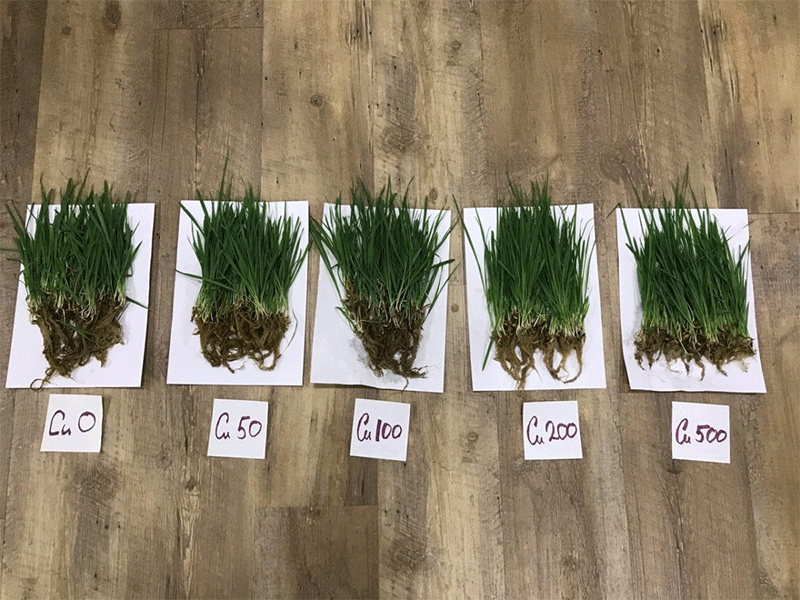
Heavy metal contamination in agricultural soils remains a pressing environmental and agronomic challenge. Copper (Cu) and zinc (Zn)—essential micronutrients for plants in small quantities—can become toxic at higher concentrations, leading to stunted growth, oxidative stress, and displacement of vital nutrients in crops. A groundbreaking study by researchers at Tyumen State University (TyumSU) demonstrates that oats (Avena sativa) may offer a natural and efficient solution for soil detoxification.
Key Findings from the Study
- Oats grown in artificially contaminated soils accumulated 1.5 to 70 times more heavy metals compared to control samples.
- The root system acted as an indicator of soil pollution, while the above-ground parts blocked copper uptake but accumulated zinc, especially in organogenic (peat-rich) soils.
- In mineral soils (sandy substrates), adding 500–1000 mg/kg of zinc caused roots to lose their barrier function, turning oats into a zinc hyperaccumulator.
- Over a two-week growth period, oats extracted:
- 0.002–0.4% of copper and 0.04–1.1% of zinc in above-ground biomass.
- When including roots, extraction efficiency increased to 0.27–2.2% for copper and 0.04–1.0% for zinc.
Broader Implications for Agriculture
Heavy metal pollution affects over 10% of global arable land, with industrial and mining activities being major contributors (FAO, 2023). Phytoremediation—using plants to extract contaminants—has gained attention as a cost-effective and eco-friendly alternative to chemical treatments. Oats, a widely cultivated cereal crop, could serve a dual purpose: soil detoxification and fodder production (if metal concentrations remain within safe limits).
However, caution is needed. Excessive zinc levels disrupt oats’ natural filtering ability, turning it into a metal accumulator rather than a barrier. Thus, soil testing and controlled cultivation are crucial before large-scale implementation.
The TyumSU study highlights oats as a promising candidate for phytoremediation of copper and zinc-polluted soils, particularly in short-growth-cycle applications. While extraction rates may seem modest, repeated cropping cycles could enhance efficiency. Further research should explore genetically optimized oat varieties and combined remediation techniques (e.g., with biochar or microbial treatments) to maximize metal uptake.
For farmers and agronomists, integrating oats into rotation systems on contaminated lands could reduce remediation costs while maintaining soil productivity. Policymakers and environmental agencies should consider incentivizing such nature-based solutions to combat soil pollution sustainably.
Error