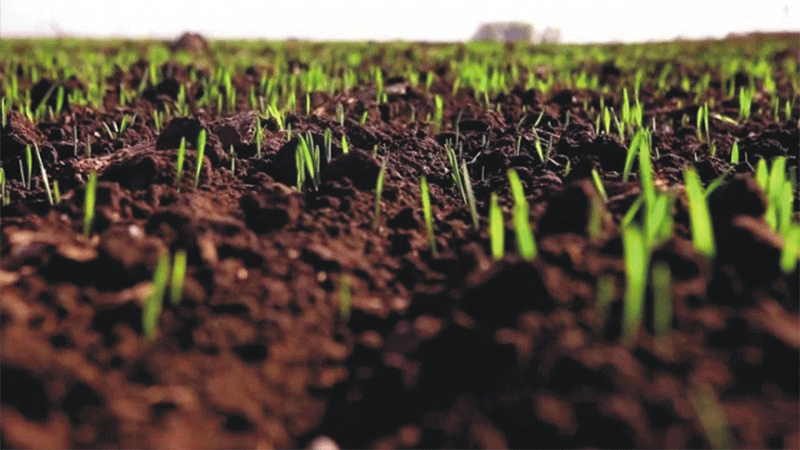
The Rostov Oblast, which contributed 10.2 million tons of wheat in 2024 (37% of Russia’s total production), is now battling a severe outbreak of septoria leaf blotch, a fungal disease caused by Zymoseptoria tritici. According to the Rosselkhozcenter (Russian Agricultural Center), infections have spread across the Southern, Central Irrigated, and Northwestern zones, with 10% of spring grains affected before grain filling and potential yield losses of 30–50% if untreated.
Global Context and Local Risks
Septoria is a global menace, costing wheat producers up to $1 billion annually in lost yields (FAO, 2023). In Rostov, the crisis is compounded by April frosts and a looming water shortage due to the shrinking Don River, which threatens irrigation for 3.6 million hectares of cropland (73% of the region’s sown area). The 2025 forecast of 13.7 million tons of grain legumes now hangs in the balance.
Mitigation Strategies
- Fungicide Timing: Research by the All-Russian Institute of Plant Protection shows that early-stage applications reduce septoria spread by 60%.
- Resistant Varieties: Trials of Septoria-resistant wheat strains (e.g., Don 107) show promise but require scaling.
- Water Management: Drip irrigation and soil moisture retention techniques could offset Don River shortages.
Rostov’s wheat sector is at a crossroads. Without immediate action—targeted fungicide use, adoption of resilient cultivars, and water conservation—the region’s #1 wheat status and food security could falter. Collaboration between farmers, agronomists, and policymakers is critical to avert a harvest disaster.
Error