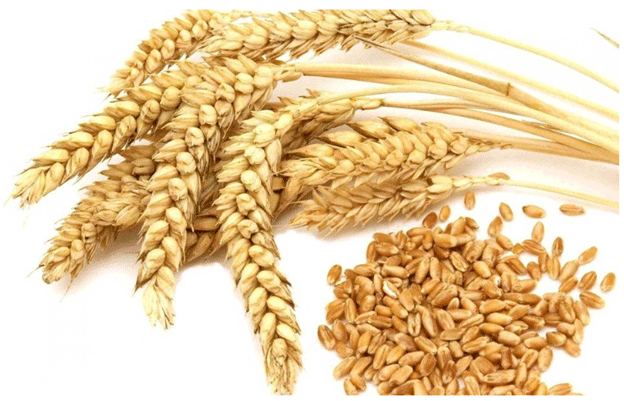
Kazakhstan Emerges as Azerbaijan’s Top Wheat Supplier in 2025
In the first quarter of 2025, Kazakhstan accounted for 80% of Azerbaijan’s wheat imports, according to Ambassador Alim Bayel at the IV Azerbaijan-Kazakhstan Expert Council. This surge highlights deepening agricultural cooperation and the strategic role of the Middle Corridor, a key transport route bridging Central Asia and Europe via the Caspian Sea.
Expanding Agri-Trade and Infrastructure
Kazakhstan’s wheat exports to Azerbaijan have grown steadily, supported by high-yield harvests and efficient logistics. In 2024, Kazakhstan harvested around 16 million tons of wheat, maintaining its position as a leading grain exporter in Central Asia (FAO, 2025). The Middle Corridor—part of China’s Belt and Road Initiative—has reduced transit times by up to 15 days, facilitating faster grain shipments (World Bank, 2024).
Ambassador Bayel emphasized that modern infrastructure and political cooperation have minimized logistical barriers, enabling smoother agri-trade flows. Additionally, Kazakhstan’s diversified export strategy ensures stable grain supplies despite global market fluctuations.
Broader Implications for Agri-Business
This trade partnership aligns with rising global wheat demand, projected to reach 800 million tons by 2025 (USDA, 2024). For farmers and agronomists, Kazakhstan’s export success underscores the importance of:
- High-efficiency farming techniques (e.g., drought-resistant wheat strains)
- Logistics optimization (e.g., Caspian Sea port expansions)
- Regional trade agreements (e.g., Eurasian Economic Union benefits)
Kazakhstan’s dominance in Azerbaijan’s wheat market reflects a strong, logistics-driven agri-trade network. The Middle Corridor’s expansion will further integrate Central Asia into global food supply chains, offering opportunities for farmers, traders, and policymakers to collaborate on sustainable trade growth.
Error