
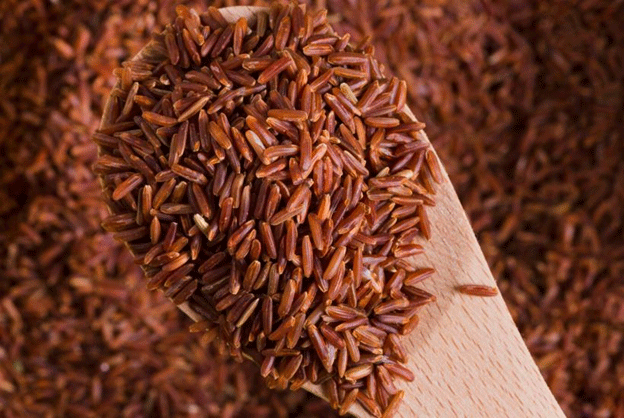
For years, brown rice has been celebrated in health-conscious circles for its higher fiber, vitamin, and mineral content compared to white rice. However, recent findings published in the journal Risk Analysis suggest that the very qualities that make brown rice more nutritious may also increase its toxic potential.
A research team led by Professor Felicia Wu at the University of Michigan examined arsenic levels in different types of rice using consumption and contamination data from the U.S. Environmental Protection Agency (EPA) and the Institute for Food Safety and Health. Their findings were striking: brown rice contains, on average, 70% more inorganic arsenic than white rice.
Why the Difference?
The key lies in rice processing. Brown rice retains its bran and germ layers, where arsenic—absorbed from soil and water—is concentrated. White rice, in contrast, is milled to remove these outer layers, leaving mostly the endosperm, which contains lower arsenic levels.
Specifically, the researchers found that:
- In U.S.-grown brown rice, about 48% of arsenic detected was in inorganic form, the most toxic variety.
- In white rice, the inorganic arsenic content was lower, averaging 33%.
These levels are concerning because inorganic arsenic is classified as a Group 1 carcinogen by the International Agency for Research on Cancer (IARC). Long-term exposure has been linked to cancers of the skin, lungs, and bladder, as well as cardiovascular disease and developmental effects.
Implications for Farmers and the Food Chain
Arsenic contamination is largely soil- and water-dependent, meaning growers and agronomists must consider local environmental conditions. In the U.S., regions such as Arkansas, Louisiana, and Texas—major rice-growing areas—have naturally higher arsenic levels in soil, partly due to historic pesticide use.
In response, agricultural scientists are working on:
- Breeding low-arsenic rice varieties
- Testing irrigation practices such as alternate wetting and drying (AWD) to reduce arsenic uptake
- Improving soil management techniques
Additionally, dietitians are recommending moderation and diversity in grain choices. Sherri Coleman Collins, a registered dietitian not involved in the study, noted the importance of a varied diet to minimize long-term exposure to any single contaminant.
A Balanced Approach
While brown rice offers health benefits due to its higher nutritional content, these findings underscore the importance of weighing both nutritional and safety factors in dietary recommendations. For those who consume rice regularly, particularly infants and children, rotating between rice types—or opting for alternatives like quinoa, millet, or barley—may be advisable.
This study challenges the popular belief that brown rice is categorically healthier than white rice. While it is richer in nutrients, it also poses a higher risk of arsenic exposure. For producers, food safety regulators, and consumers alike, this finding highlights the need for a more nuanced approach to rice cultivation, consumption, and dietary guidance.
Brown Rice, White Rice, Arsenic In Rice, Food Safety, Inorganic Arsenic, Rice Farming, Soil Contamination, Diet And Health, Crop Management, University Of Michigan, Risk Analysis, Rice Processing, Agriculture Science, Public Health, Safe Grain Production
Error