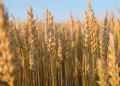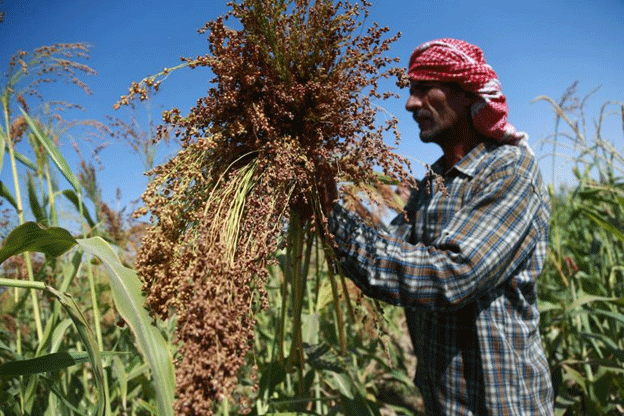
Syria has received its first seaborne wheat shipment in over a decade, a significant moment in the country’s long and difficult journey toward post-war recovery. On April 20, 2025, Syrian port authorities confirmed the arrival of a 6,600-ton grain shipment at Latakia port, signaling a cautious yet meaningful step in reestablishing international trade routes under the interim government led by President Ahmed al-Sharaa.
The origin of the wheat was not officially disclosed by Syrian authorities. However, regional traders told Reuters that the shipment likely came from Russia, a country that once served as Syria’s main grain supplier under the Assad administration, alongside Iran. After the fall of Assad and the opposition’s recent military advances, these trade flows had dried up, making this delivery even more significant.
The End of Isolation?
This shipment is the first sea-based wheat delivery since the Assad regime collapsed in December 2024, and the Syrian General Directorate of Land and Sea Borders called it “a clear sign of a new phase of economic recovery.” Until now, Syria had relied primarily on land-based imports from neighboring countries, limited by financial restrictions and logistical barriers.
While wheat and food products are not directly targeted by U.S. or UN sanctions, banking and insurance limitations have made it difficult for foreign suppliers to engage in commercial trade with Syria. New Syrian leaders are now seeking to rebuild the economy through partnerships and practical cooperation, focusing on critical imports, restoration of infrastructure, and civil services.
Grain Security and Self-Reliance
Before the war began in 2011, Syria was largely self-sufficient in wheat, producing around 4 million tons annually, much of it grown in the fertile northeast. However, years of conflict, drought, and economic collapse have drastically reduced agricultural output. According to FAO and WFP joint assessments, wheat production in 2023–2024 was estimated at only 1.2 million tons, with a national cereal deficit of nearly 2 million tons.
The arrival of this wheat shipment is a symbol of both hope and necessity. With more than 12 million Syrians food insecure, according to the World Food Programme, securing staple grains is a top priority for the interim administration.
International Engagement and Economic Vision
The UN Development Programme (UNDP) is urging Syria to begin reconstruction now, without waiting for international sanctions to be lifted. Abdallah al-Dardari, UNDP regional director for Arab states, emphasized the importance of immediate, visible progress:
“People must quickly feel improvements… especially in such a difficult time,” he said in a recent AFP interview in Damascus.
Al-Dardari added that investment in education, public services, and community-level projects will be essential to restoring trust and laying the foundation for future funding.
Meanwhile, international flights have resumed after more than a decade. In January 2024, several airlines reinstated routes to Damascus International Airport, and on April 19, a Syrian passenger plane departed for the UAE, marking a new phase of reintegration into regional networks.
What’s Next for Syrian Agriculture?
Syria’s ability to rebuild its agriculture will be critical. Restoring wheat production will require:
- Irrigation system repairs
- Access to certified seed and fertilizers
- Training and support for displaced farmers
- Protection of farming communities from conflict and economic shocks
International aid, if effectively mobilized, can help reactivate Syria’s wheat belt and reduce dependence on imports in the long run. In the short term, however, shipments like the one received in Latakia will be essential to bridging the gap and feeding a population still recovering from years of turmoil.
The arrival of Syria’s first wheat shipment since the fall of Assad marks a symbolic and strategic milestone in its economic recovery. As the new government navigates a landscape of sanctions, rebuilding priorities, and humanitarian needs, the focus must remain on practical gains—reopening trade routes, restoring basic services, and reinvigorating the agricultural sector. Only then can Syria move toward a future of stability and self-sufficiency.
Error