Winter wheat growers in Ireland are entering a crucial crop management window as the 2025 season progresses into stem extension. According to George Blackburn, agronomist with Cooney Furlong, winter wheat crops in the Wexford area have so far remained largely disease-free, a rare situation that reflects both good agronomic practice and exceptional spring weather conditions.
Septoria Looms on the Horizon
Despite the positive start, Blackburn cautions that Septoria tritici, the most damaging disease in Irish winter wheat, will inevitably build in the coming weeks. “At this stage in the season, it’s all about managing the canopy,” he explained. “Overapplying nitrogen can drive lush growth that increases susceptibility to Septoria. That’s a risk we want to avoid.”
Septoria, caused by Zymoseptoria tritici, thrives in humid conditions and is known to reduce yields by 30–50% in high-pressure seasons if not adequately managed. According to Teagasc, the Irish agriculture and food development authority, early infection on lower leaves can move rapidly up the canopy if not stopped in time, especially when the weather turns wet.
Fungicide Strategy: T0 to T3
To protect crops through the growing season, Blackburn recommends a four-spray fungicide programme, targeting key growth stages:
- T0 (Growth Stage 30-31): Already underway in Wexford. Focuses on protecting the lower canopy and includes a plant growth regulator (PGR).
- T1 (GS 32): Applied at the first node detectable stage, targeting emerging leaves.
- T2 (GS 39): Flag leaf protection – the most important spray for yield.
- T3 (GS 59): Ear emergence or “head spray,” mainly targeting Fusarium and late-season foliar diseases.
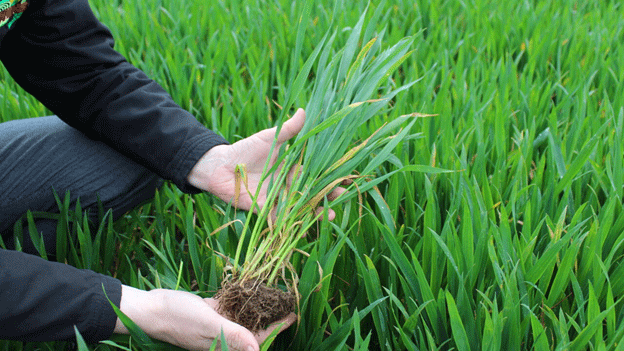
Blackburn noted that crops are currently at Growth Stage 31, showing strong establishment and good moisture access, particularly where minimum tillage (“min-till”) systems were used. These systems allowed deeper root access to soil moisture during recent dry spells — a key advantage.
Why Timing Matters
The Irish Met Éireann long-term outlook suggests fluctuating temperatures and isolated showers in the weeks ahead, creating ideal conditions for latent Septoria development. While nights remain cool — which slows down rapid canopy development — the disease can still progress, especially with warming daytime temperatures.
“It’s all about timely applications and decision-making,” Blackburn emphasized. “We’re coming from a good base, but now it’s about maintaining that yield potential by staying ahead of the disease curve.”
High Yield Potential on the Table
Winter wheat crops sown in autumn 2024 benefited from ideal sowing conditions. “Establishment is everything,” Blackburn said. “Every crop starts with a potential of 100. The job of the grower is to stop that number from falling backward.”
Ireland’s average winter wheat yield hovers around 10–11 tonnes per hectare, but with strong crop health, some regions — especially under expert management — can push toward 14 t/ha, as seen in previous high-performing years.
With crops healthy and well-established, Irish wheat growers are well-positioned to achieve strong yields in 2025 — but vigilance is critical. Septoria remains the single greatest threat to wheat in the region. A well-timed fungicide program, careful nitrogen use, and responsive crop management will be key to protecting yield and profitability in the months ahead.
Error