

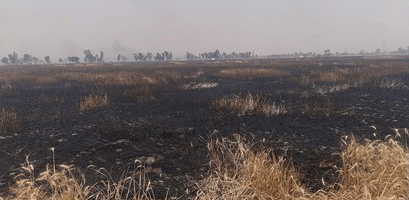
In a severe blow to Punjab’s agricultural community, a large-scale fire on Saturday ravaged over 100 acres of wheat fields in the Zira sub-division of Ferozepur district, impacting crops just days away from harvest. The incident affected fields in Malsian Kalan and nearby villages, gutting wheat crops and damaging farm equipment.
According to Gurwinder Singh, a local farmer, the fire began near Malle Ke Road around 1 PM, rapidly spreading through dry wheat stubble and mature crops, which are highly flammable at this stage. “We had no time to react — it spread so quickly,” he reported. Along with the fields, a tractor was also destroyed.
Among the most severely affected were:
- Nachhattar Singh, Kuldeep Singh, Surjeet Singh, and Master Ranjit Singh – lost a combined 20 acres.
- Nirmal Singh – lost 15 acres.
- Chanan Singh – suffered damage to 25 acres of standing wheat.
Increasing Risk of Harvest-Time Fires
This incident is part of a concerning pattern across northern India, where harvest-time fires are becoming more frequent due to a combination of dry weather, increased mechanization, and lack of firebreaks. While wheat is not as flammable as crop stubble, harvest-stage wheat fields dry quickly, making them susceptible to accidental fires from machinery, electrical faults, or discarded cigarettes.
According to the Punjab Agricultural University (PAU), between 2018 and 2023, the state witnessed an average of 150–200 fire incidents annually during the wheat harvest season, with losses sometimes exceeding 500 acres in a single event.
The National Disaster Management Authority (NDMA) has repeatedly urged for community-based fire prevention plans, which include:
- Maintaining fire lines between fields.
- Creating emergency fire response teams in rural blocks.
- Using non-sparking machinery during harvesting.
- Raising awareness among farmers about the dangers of burning trash or stubble near fields.
Government Response and Compensation
Executive magistrate Harminder Singh, who visited the site, promised full support and confirmed that a damage assessment report is underway. This is essential for activating state-level crop loss compensation under the Punjab State Disaster Response Fund (SDRF).
In previous years, affected farmers in Punjab have received ₹8,000 to ₹12,000 per acre as compensation, depending on the severity of the damage and the total area affected. However, disbursement timelines and documentation often delay relief, prompting calls for digitized claims and insurance integration.
The Bigger Picture: Insurance and Fire Resilience
The Pradhan Mantri Fasal Bima Yojana (PMFBY) does cover fire-related crop damage, but uptake in Punjab remains limited. As of 2023, less than 20% of wheat-growing farmers in Punjab were enrolled in the scheme, due to awareness gaps and skepticism about claim settlement.
With climate variability increasing fire risks, experts from the Indian Council of Agricultural Research (ICAR) suggest the integration of real-time fire alerts via mobile apps and satellite monitoring for early detection and response.
The Zira fire is a stark reminder of the growing vulnerability of farms to accidental fires during harvest season. Beyond compensation, the incident underscores the urgent need for better fire prevention strategies, increased insurance coverage, and coordinated response mechanisms at the village level. Protecting crops at the final stage of the growing season is essential not only for farmers’ livelihoods but also for ensuring food security and rural stability.
Error