

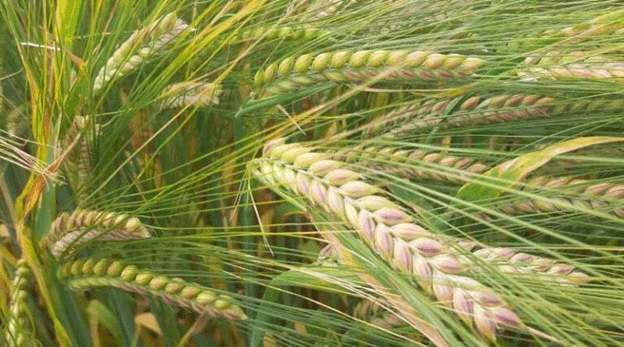
As spring barley drilling progresses across the UK, growers are being reminded of the critical importance of early planning for disease control and lodging prevention. In a season where malting premiums are closely tied to grain quality, the correct use of fungicides and plant growth regulators (PGRs) can be the difference between a profitable harvest and a missed opportunity.
Weather-Driven Disease Risk in 2024
Spring 2024 has brought high variability in temperature and rainfall across the UK, increasing the likelihood of foliar diseases. According to agronomists, wet conditions will elevate the risk of Rhynchosporium and Net Blotch, while warmer, humid weather may favor the development of brown rust.
Alongside the weather, cultural practices are also playing a major role in disease risk.
- Early-sown crops (including those drilled before Christmas) are generally more susceptible.
- Short rotation intervals, especially back-to-back barley, increase the risk of inoculum buildup.
- Variety resistance is a crucial consideration when deciding on fungicide applications.
Tailored Fungicide Programmes: Syngenta’s 2024 Approach
Syngenta’s recommended fungicide plan adapts to disease pressure and crop stage:
| Crop Stage | Disease Level | Recommended Fungicide Strategy |
| T0 – Early | Early Net Blotch | KAYAK® |
| T1 – GS31-32 | Low to Moderate | ELATUS® Era 0.4–0.6 l/ha |
| T2 – GS37-39 | High Disease / Rust | MIRAVIS® Plus + ERA® 1.25–1.5 l/ha, add AMISTAR® if brown rust is dominant |
MIRAVIS® Plus, positioned as a T2 product, is showing impressive yield gains — up to 0.5 t/ha over competitor products, according to Syngenta trial data. Its broad-spectrum control and flexible application window make it a strong choice for spring barley producers targeting high malting standards.
Preventing Lodging with Smart PGR Use
Lodging remains a top threat to spring barley yields and quality. It not only complicates harvest but can lower specific weight and grain uniformity, directly affecting malting potential.
Key PGR strategy recommendations:
- One application of MODDUS® between GS30–32 strengthens stems and supports anchorage.
- In high-risk areas or under high nitrogen regimes, a follow-up ethephon-based PGR may be needed to reduce plant height and lodging risk.
- For spring barley, 0.1–0.2 l/ha MODDUS® at T0, followed by an ethephon product at T1 or T2, offers robust protection.
Latest UK Market and Crop Data
According to AHDB’s April 2024 planting update, UK spring barley area is expected to increase slightly this season due to strong malting demand and rotational needs following a wet winter. Market prices for malting barley are currently trading 10–12% above feed barley, reinforcing the value of quality-focused crop management.
As the 2024 season unfolds, strategic crop protection and tailored agronomy will be essential for spring barley growers targeting top yields and malting premiums. By aligning fungicide and PGR programmes with real-time conditions and crop development, farmers can secure both yield and grain quality — even in a weather-challenged year.
Error


